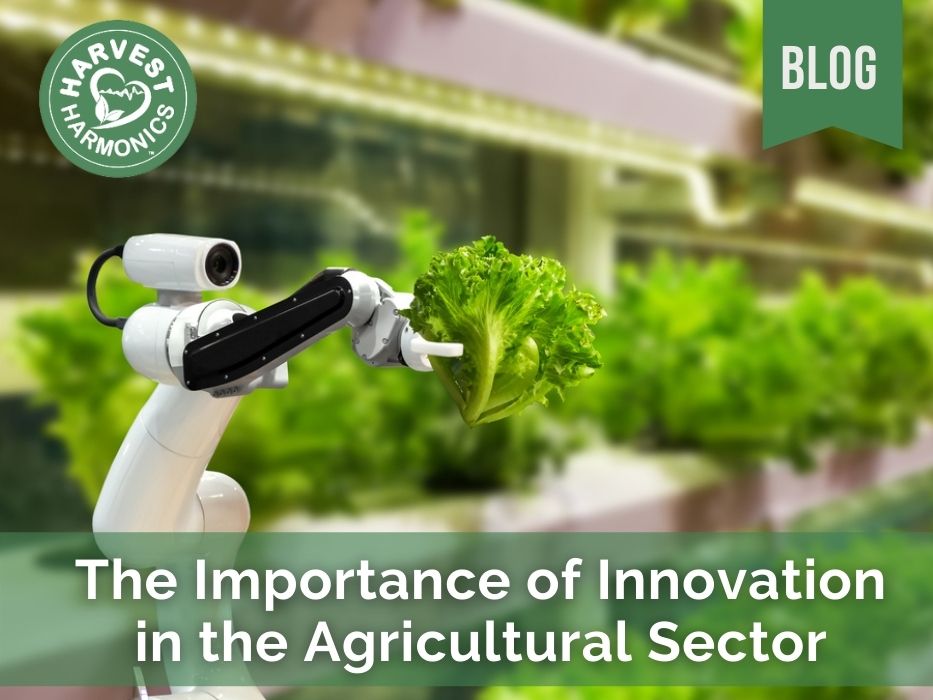
The Importance of Innovation in the Agricultural Sector
Agriculture has undergone significant changes throughout history, as a result of advances in technology and current trends. These changes have motivated the development of new products and production processes, which, in turn, represent a development in the industry itself. When this happens, we are talking about an innovation in the agricultural sector.
Innovation in the Agricultural Sector as a Competitive Advantage
Essentially, the concept of innovating refers to making changes in contemporary ways. Someone who innovates is someone who applies new ideas, new concepts and new practices in their business or activity, and achieves different results thanks to it.
The ultimate goal is to achieve a competitive advantage through innovations.
The introduction of new practices in production processes, in field management, new ideas for capturing daily work information, adoption of new technologies, among many other possibilities, all based on an appropriate investigation, help to guarantee the obtaining of good results.
We can derive that innovation in the agricultural sector is summarized in three groups:
Chemical Innovations
The technological development of the agrochemical industry resulted in the generation of various products for the field, all aimed at improving production levels. Today it is known that there are two very marked and defined trends in terms of the types of agriculture: traditional and organic crops, which make use of both non-chemical fertilizers and pest control by natural, biological and ecological means. Today we can say that there is a strong trend towards organic crops, as well as reducing the use of chemical pesticides, which has resulted in the creation of new agricultural products that meet these needs.
Mechanical Innovations
It refers to the technical processes of mechanization of the agricultural protocol through the use of machines that facilitate the production processes in all its phases, from the preparation of the land and the sowing of seeds, to the harvest. The use of machinery helps in reducing time, which would be much longer in manual processes. The most common machines are seeders, agricultural tractors, combine harvesters, and motor cultivators. Any cultivation process that requires moving to an industrial or pre-industrial phase must, obligatorily, make use of machinery to keep up with the competitive levels of the market.
Biotechnological Innovations
New discoveries in biophysics are applying the laws and principles of physics to biological functions.
Biophysics have been used in various ways to stimulate biological processes or measure the effects of other innovations, such as the chemical innovations mentioned above.
The Kyminasi Plant Booster is the first innovation in this field, which stimulates the entire photosynthesis process of plants simultaneously. This results in improvements that are much more impressive than other approaches that only handle one aspect of this process.
As you may have seen, innovation has been part of agriculture over time, and it is a very important element in competitiveness, not only for the farmer in his business, be it small or large, but also for an industry.
Technologies motivate and enable this innovation, so it is vital to stay informed about changes and new trends.
By Arantza Castro
Press Room
Agricultural Technology for Farmers in India
Harvest HarmonicsTM New Biophysics Agricultural Technology For Farmers In India The Agricultural Biophysics technology, 20…
1

Organic Earth Tech, OETI, Launches One Million Dollar Technology
After hurricanes Maria and Irma, Puertorrican farmers are yet to receive the needed aid to recover. Organic Earth Tech…
0

Produce More From Less
CEO Harvest Harmonics Frank Arlia speaking at Replenish. Earth interview by Tia Kansara – London Climate Action Week. How…
0

Replenish Earth and the Environmental RE Talk Series
Replenish Earth and the environmental RE Talk Series event that reunited the top thinkers in the world Harvest Harmonics…
1
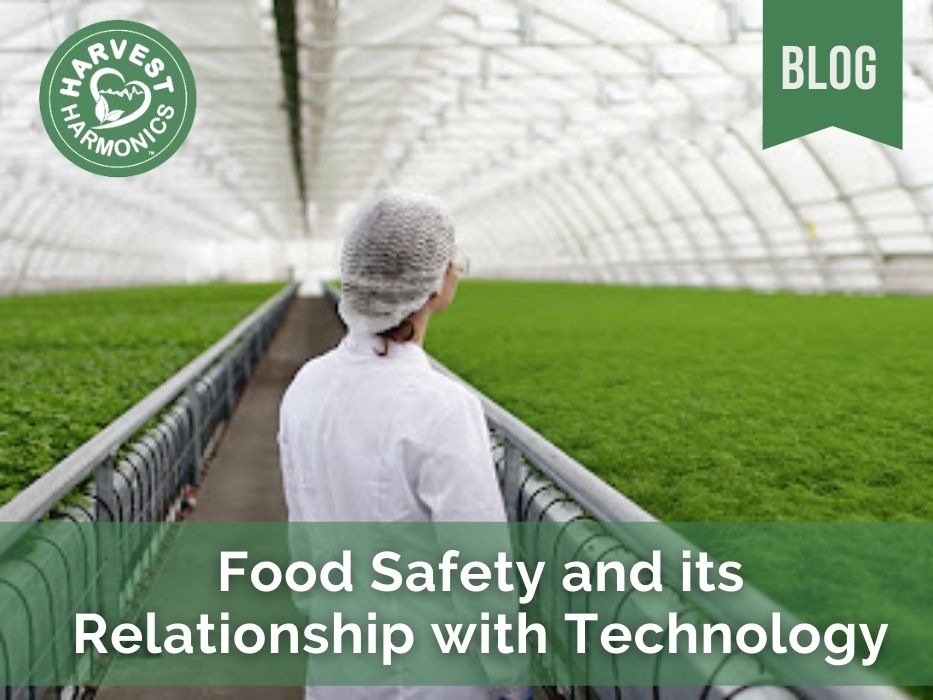
Food Safety and its Relationship with Technology
Today, food safety is an issue that affects the entire production and logistics chain in the food industry. With globalization, food travels thousands of kilometers and can carry contagion of dangerous diseases.
However, there is an aspect that is little discussed and yet, in recent times, has been acquiring greater importance. Despite all the traceability standards, hygiene and safety rules that farmers can implement in their fields, food security is also affected by the large amount of agrochemicals used in traditional agriculture.
Many farmers are transitioning to less invasive production systems, moderating applications, jointly using organic products or opting for a radical change and converting their fields to organic production zones.
However, this comes at a cost. The conversion from conventional to organic crops, for the most part, represents a setback at least for a time, since the entire system must adapt to this new strategy, soils are often deficient in nutrition and pests require a completely different management. This often means a higher cost and a decrease in productivity in the short term.
Technology provides tools that support the development of new strategies in agriculture, thus allowing us to explore the changes necessary to meet the demands of today’s consumers.
Kyminasi Plant Booster enters this scene with an innovative proposal that allows reducing the use of chemical fertilizers and pesticides, while maintaining or even increasing production. Its frequency system allows the plant to utilize the nutrients and water more efficiently, aligning itself with its full potential. In this way, farmers can reduce the need for external support, promoting more abundant crops and more vigorous plants.
Kyminasi Plant Booster works hand in hand with all the efforts made to achieve healthy products, supporting the reduction of the use of pesticides and promoting a safer agriculture, both for the consumer, as well as for the farm workers and communities.
By Arantza Castro
Press Room
Agricultural Technology for Farmers in India
Harvest HarmonicsTM New Biophysics Agricultural Technology For Farmers In India The Agricultural Biophysics technology, 20…
1
Organic Earth Tech, OETI, Launches One Million Dollar Technology
After hurricanes Maria and Irma, Puertorrican farmers are yet to receive the needed aid to recover. Organic Earth Tech…
0
Produce More From Less
CEO Harvest Harmonics Frank Arlia speaking at Replenish. Earth interview by Tia Kansara – London Climate Action Week. How…
0
Replenish Earth and the Environmental RE Talk Series
Replenish Earth and the environmental RE Talk Series event that reunited the top thinkers in the world Harvest Harmonics…
1
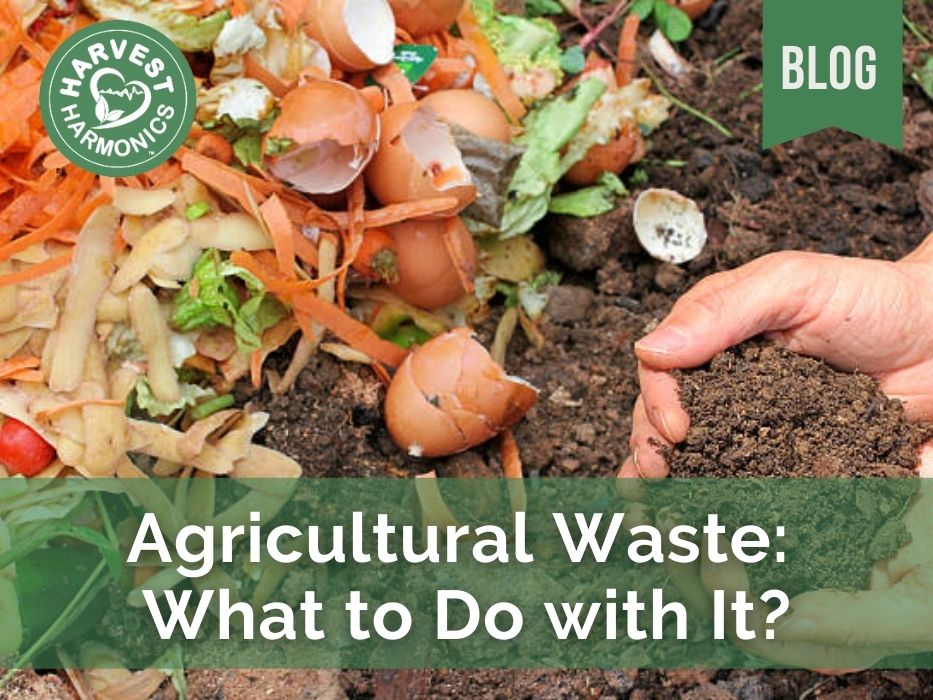
Agricultural Waste: What to Do with It?
Agricultural residuals
The agricultural sector is increasingly technical and industrialized, and that generates a large amount of agricultural waste. Whether it is protection materials, plastic sheets for greenhouses, plastics to cover grass, cans of phytosanitary products, oils and motor elements, water and fertilizers, etc; all of them end up being agricultural waste.
In this post, we are going to talk about what agricultural waste is, what types are there, what problems they entail if they are not managed correctly, and what alternatives and solutions there are to be able to do it properly.
What are agricultural residues?
They are all those products generated as a consequence of the food production process in agricultural and livestock farms, including the transformation units.
The agricultural and livestock sector is very diverse and this means that, compared to other more specific professional sectors, there are a large number of products that end up being waste.
There are several types of agricultural waste depending on its material and subsequent management.
Compostable or naturally occurring agricultural waste:
Recyclable or naturally occurring waste is multiple and falls into the category of least problematic agricultural waste. All of them can be used on the same farm or recycled in recycling plants to reuse them.
An example of this is all the pruning or cultivation waste, slurry and manure, animal remains, cardboard sacks, wooden pallets, serums from cheese factories, etc.
Non-recyclable agricultural or industrial waste:
Non-recyclable waste is all agricultural waste that is used as construction elements, mechanization, transport, livestock protection elements, etc. All these wastes are the most problematic and difficult to manage, since they are usually bulky and cannot be reused or recycled.
Examples of non-recyclable waste are plastic sheeting for silage or greenhouse, all kinds of shading or anti-stone nets, tires and machinery, metal structures for fences or covers, workshop oils, irrigation hoses, etc.
Hazardous agricultural waste:
Within agricultural waste there is the category of hazardous waste for the environment. This type of waste is all those related to phytosanitary products or fertilizers that can become a very serious problem if they are not managed correctly and end up burning or leaking into groundwater or the air.
An example of this is all the containers of phytosanitary products, acids, fertilizers, the dirty water from the cleaning of the machines that are used to apply the chemical products, and all the containers of medicines, antibiotics or detergents that are used for cleaning the facilities. In this sense, it is important to comply with the regulations and register phytosanitary actions.
Problems and difficulties in managing agricultural waste
Agricultural waste is a problem for all ranchers and farmers since the responsibility for its management depends directly on who generates this waste.
There are several problems around this waste:
- Pollution: burning waste or mismanaging the remains of phytosanitary products pollute the air or aquifers and can seriously alter ecosystems.
- Generic waste regulations: except for some agricultural waste such as the carcasses of dead animals or the packaging of phytosanitary products, the rest of this type of waste does not have its own regulations that facilitate its management. This is a problem for farmers since, depending on the type of agricultural waste, a specific waste manager must be hired.
- Few more sustainable alternatives: there are still no economic alternatives for biodegradable materials that fulfill the same function as plastic elements. This fact makes it very difficult to reduce non-recyclable waste.
- Little training in the sector regarding the management of agricultural residues.
- Recommendations for the management and treatment of waste in agriculture
- Although for most farms this waste is a problem, let’s see what solutions or alternatives there are to reduce it on our farm.
Waste management and treatment
- Opt for organic farming, since it is the production system that generates less waste and with more added value in its products.
- Use materials of natural origin such as wood in structures or fences or very durable materials that do not deteriorate very easily.
- Replace the anti-grass plastic tarps with biodegradable tarps or straw mulches or shredded pruning debris.
- Choose to buy all the cardboard or paper sacks in the materials that it is possible to use.
- Grouping into cooperatives or associations to have good advice on agricultural waste management and provide infrastructure for this purpose.
By Arantza Castro
Press Room
Agricultural Technology for Farmers in India
Harvest HarmonicsTM New Biophysics Agricultural Technology For Farmers In India The Agricultural Biophysics technology, 20…
1
Organic Earth Tech, OETI, Launches One Million Dollar Technology
After hurricanes Maria and Irma, Puertorrican farmers are yet to receive the needed aid to recover. Organic Earth Tech…
0
Produce More From Less
CEO Harvest Harmonics Frank Arlia speaking at Replenish. Earth interview by Tia Kansara – London Climate Action Week. How…
0
Replenish Earth and the Environmental RE Talk Series
Replenish Earth and the environmental RE Talk Series event that reunited the top thinkers in the world Harvest Harmonics…
1