

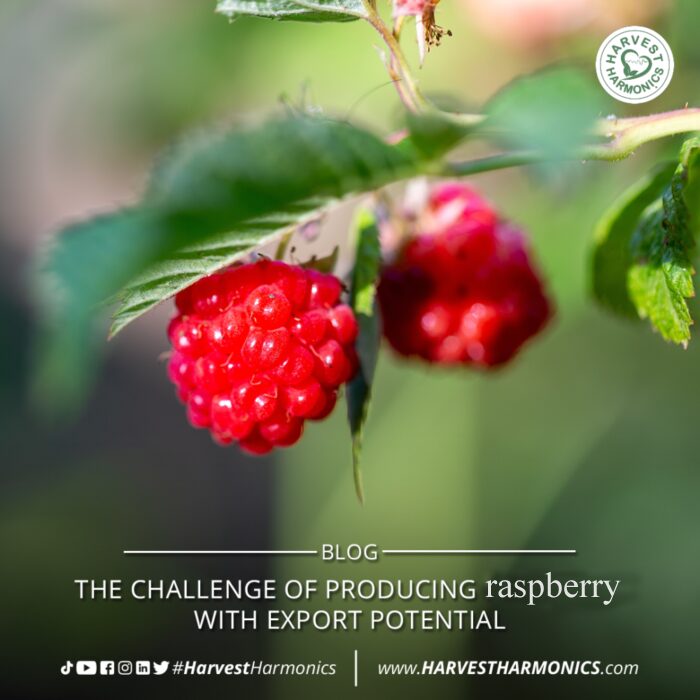
The Challenge of Producing Raspberries with Export Potential
Berry exports are still meager and their crops barely reach 100 hectares throughout the country. However, there is a great opportunity for growth in the US market.
It is just the first steps. To date, Peruvian raspberries have only been exported in small samples to different countries, for amounts not exceeding US$5,000. However, this situation could change if the product enters the United States, the main partner of Peru’s agro-export sector. According to the Foreign Trade Society of Peru (Comex Peru), work is currently being done on the subject, with the aim of encouraging growth in the production of the fruit.
According to the international adviser on berry cultivation , José Cordero, the Peruvian raspberry could follow a route similar to that of blueberries, the flagship product of the country’s agro-export basket. “In addition, the entry of the Peruvian raspberry into the United States would cause the interest in investing in this crop by Peruvian agro-industrialists to increase exponentially,” he says.
If they were to enter that market, Peruvian agro-exporters would have Mexico as their main competitor, which accounts for 99% of US raspberry purchases. In 2019, the US imported raspberries from Mexico for a total of US$1.36 billion, an increase of 20% compared to the previous year. “This increase has been constant since 2017 and it is estimated that it would continue in this line, an aspect that would be very beneficial for Peruvian raspberries and, in general, for the national agro-export basket,” highlights the advisor.
It should be noted that the main destinations for Peruvian raspberries in 2019 were Europe (70% of the total volume exported), Panama (19%) and Canada (11%). Regarding its prices, Spain registered the highest with US$ 6.89 per kilo. The UK ($5.43) and the Netherlands ($4.33) followed.
PRODUCTION IN NORTE CHICO AND SIERRA CENTRAL
In that sense, how is the outlook for raspberry production heading? The expert points out that in these last three years they continue to encourage the development of raspberry planting in high Andean areas and in the small north of Peru. The process is slow because there is not much
support from some companies or state programs. “But in this last year, in Huaraz (central highlands) and the northern region we have already planted raspberries as a test of adaptability, production and profitability with the search for markets,” he stresses.
Cordero refers that to expand the supply of this crop, the strategies that must be carried out are: to promote productive chains and support from the private sector in the search for markets, and to jointly increase national production to supply national and foreign markets in the future, especially from the US market.
Asked about the number of hectares that currently exist in the country, he comments that Huaraz has approximately 10 hectares divided into plots of 1 to 2 hectares, while the small north this year has approximately 15 to 20 hectares from Barranca to Cañete (region Lime). “And at the national level, the installed area is still very small, which does not exceed 80 to 100 hectares,” he indicates.
Likewise, it mentions that regarding the areas where the cultivation of this berry has been better adapted , they have a record of programs from Cajamarca, Huaraz and other departments with crops no larger than 4 hectares (in high Andean areas it is recommended to use macro tunnel) and in the north small the adaptation of the fruit tree is going very well.
TARGETING VARIETIES FOR A SUITABLE LOCATION
Regarding the varieties that are currently produced, Cordero says that most of the trials installed are of the Heritage variety , a variety that is already grown in several areas, giving good results as a project. “Now we are looking for improvement alternatives with new varieties with higher production that are between 15 and 20 tons / ha,” he says.
In this regard, he states that Viveros California (Spain) and EMCO CAL (USA) are currently also offering raspberries, blackberries and blueberries, which are increasingly sought after by consumers around the world due to their characteristics and health benefits. “Within the species of blackberries and raspberries, they have varieties that can be grown in areas such as the coast of Peru, where the accumulation of cold hours is low, with a very suitable location for these varieties,” he underlines.
Regarding the advantages that can be highlighted in the agronomic management of this fruit tree, he indicates that, although it is a crop resistant to pests, they have the phytosanitary challenge of bringing new varieties resistant to root fungi. “And continue to control with permitted products.” Likewise, he asserts that the raspberry is not so complicated to manage, therefore, it is possible to learn about the process that the crop has, both in the sanitary part and in the production and commercialization part.
If you would like to know more about our technology, contact us on our website www.harvestharmonics.com
Source: REDAGRICOLA
Press Room

Agricultural Technology for Farmers in India
Harvest HarmonicsTM New Biophysics Agricultural Technology For Farmers In India The Agricultural Biophysics technology, 20…
1

Organic Earth Tech, OETI, Launches One Million Dollar Technology
After hurricanes Maria and Irma, Puertorrican farmers are yet to receive the needed aid to recover. Organic Earth Tech…
0

Produce More From Less
CEO Harvest Harmonics Frank Arlia speaking at Replenish. Earth interview by Tia Kansara – London Climate Action Week. How…
0

Replenish Earth and the Environmental RE Talk Series
Replenish Earth and the environmental RE Talk Series event that reunited the top thinkers in the world Harvest Harmonics…
1
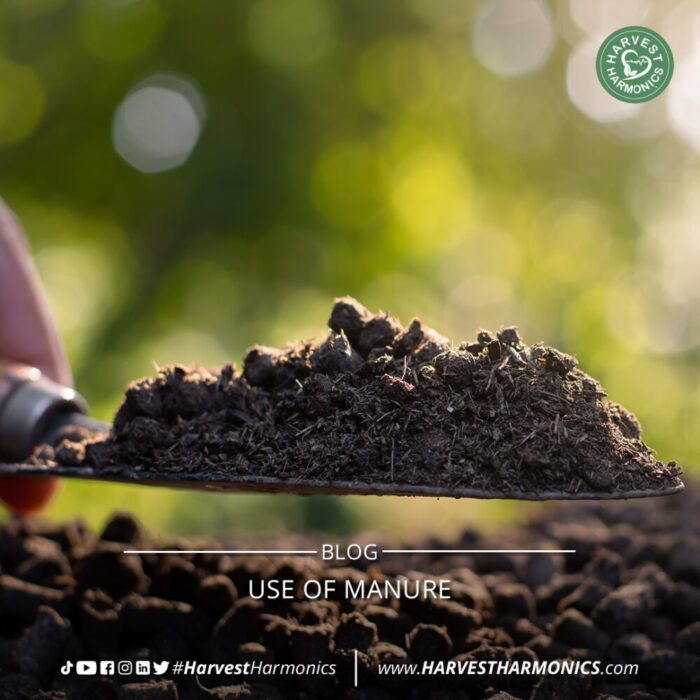
Use Of Manure
One of the main objectives of an adequate use of manure is to provide nutrients to plants and increase the amount of organic matter in the soil. But to achieve this, the rancher or farmer must decide what to do to properly manage manure and other organic waste, so that they have a profitable agricultural production with minimal nutrient losses. This action can save them expenses used for the purchase of commercial chemical fertilizers
It is fully identified that organic matter is of great importance for the proper development of plants. Under certain managements, agricultural soils tend to gradually lose their organic matter, which is manifested in increasingly lower crop yields. When organic matter is added to these soils in appropriate materials, the response in yields is extraordinary; up to 8- to 10-fold higher yields are observed. Organic matter, particularly when it comes from manure, contains significant amounts of all the chemical elements used by plants.
Consequently, the use of manure in agriculture supports the increase in yields for the following reasons:
1. They provide all the essential elements that crops require
2. They have a residual effect greater than that of chemical fertilizers
3. Gradually release nutrients that favor their availability for the development of crops
4. They improve the structure of the soil, porosity, aeration and the capacity for water retention
5. They form organic complexes with nutrients, keeping them available to plants.
6. Increase the cation exchange capacity of the soil
7. They release carbon dioxide during their decomposition which forms carbonic acid which solubilizes nutrients from other sources.
8. They supply organic carbon that is used as an energy source for heterotrophic organisms present in the soil.
9. Increases water infiltration
10. They favor greater resistance to soil aggregates
11. The effect of the use of manure allows the soil to be more productive, conserves its fertility and has a sustained use over time.
Although manure has been used for centuries to fertilize crops, its use today is still empirical. The dosage is made based on the experience of the farmers and the simple tests when observing a favorable response of the crops; but it is necessary to have knowledge of its nutritional content, its rate of decomposition, the nutrient requirements of the crop and its residual effects.
Manures decompose according to a rate of mineralization. A decomposition ratio of 0.35, 0.15, 0.10 and 0.05 indicates that the manure in the first year decomposes 35%, the residual of the first year decomposes by 15% in the second year, the residual of year two decomposes 10% in year three and the third year residual breaks down 5% in year four. And in the same relationship Nitrogen, Phosphorus, Potassium and other nutrients are released.
If you would like to know more about our technology, contact us on our website www.harvestharmonics.com
Press Room
Agricultural Technology for Farmers in India
Harvest HarmonicsTM New Biophysics Agricultural Technology For Farmers In India The Agricultural Biophysics technology, 20…
1
Organic Earth Tech, OETI, Launches One Million Dollar Technology
After hurricanes Maria and Irma, Puertorrican farmers are yet to receive the needed aid to recover. Organic Earth Tech…
0
Produce More From Less
CEO Harvest Harmonics Frank Arlia speaking at Replenish. Earth interview by Tia Kansara – London Climate Action Week. How…
0
Replenish Earth and the Environmental RE Talk Series
Replenish Earth and the environmental RE Talk Series event that reunited the top thinkers in the world Harvest Harmonics…
1
Biodegradable Material For Encapsulation Of Agricultural Fertilizers
It is a strategy tested at the Brazilian Federal University of São Carlos to allow a controlled and gradual release with the consequent reduction in the amount used and waste.
One of today’s serious environmental problems is the residue of fertilizers, pesticides and growth regulators that agriculture leaves in the soil, mainly in large production units. Therefore, in the specific case of fertilizers, one way to reduce the amount of material used, promote its efficiency and reduce the environmental impact as much as possible consists of encapsulating the nutrients with biodegradable coatings that ensure their controlled and gradual release in the water and on the ground.
Faced with this problem, researchers from the Federal University of São Carlos (UFSCar) on the campus of the town of Araras, in the state of São Paulo, Brazil, are carrying out a line of research oriented towards the development of materials for the encapsulation of fertilizers since 2014. This is highlighted in an article published by the Mundo Agropecuario portal.
“Fertilizers are made up of highly soluble salts, easily transported by rain. The encapsulation allows its release in a controlled and gradual manner, with the consequent reduction in the amount used and waste”, says study coordinator Roselena Faez.
According to the researcher and as highlighted by Mundo Agropecuario, the solution to the issue of encapsulation constitutes an essential step towards obtaining the so-called “improved efficiency fertilizers”. This involves the adjustment of various parameters: the release of nutrients and their absorption in the crop, the biodegradability of the lining material and the cost-benefit ratio of the product. “To arrive at the appropriate coating material, we started with chitosan, a bio-based polymer that is abundant, renewable and readily available,” she says.
It is worth noting that chitosan is made from chitin, a polysaccharide present in the exoskeletons of crustaceans – such as shrimp, lobsters and crabs – and in the coatings of insects and fungal mycelia. Therefore, based on chitosan, Faez and his collaborators prepared microspheres and microcapsules to coat fertilizers.
“In a previous work, carried out in collaboration with Professor Claudinei Fonseca Souza (UFSCar-Araras), we had already used a technique for monitoring the release of fertilizer nutrients into the soil, without the need for harvesting. This is achieved by measuring the electrical conductivity of the soil and correlating this parameter with the release of nutrients”, he comments. If you would like to know more about our technology, contact us on our website www.harvestharmonics.com
Source: RedAgricol
Press Room
Agricultural Technology for Farmers in India
Harvest HarmonicsTM New Biophysics Agricultural Technology For Farmers In India The Agricultural Biophysics technology, 20…
1
Organic Earth Tech, OETI, Launches One Million Dollar Technology
After hurricanes Maria and Irma, Puertorrican farmers are yet to receive the needed aid to recover. Organic Earth Tech…
0
Produce More From Less
CEO Harvest Harmonics Frank Arlia speaking at Replenish. Earth interview by Tia Kansara – London Climate Action Week. How…
0
Replenish Earth and the Environmental RE Talk Series
Replenish Earth and the environmental RE Talk Series event that reunited the top thinkers in the world Harvest Harmonics…
1
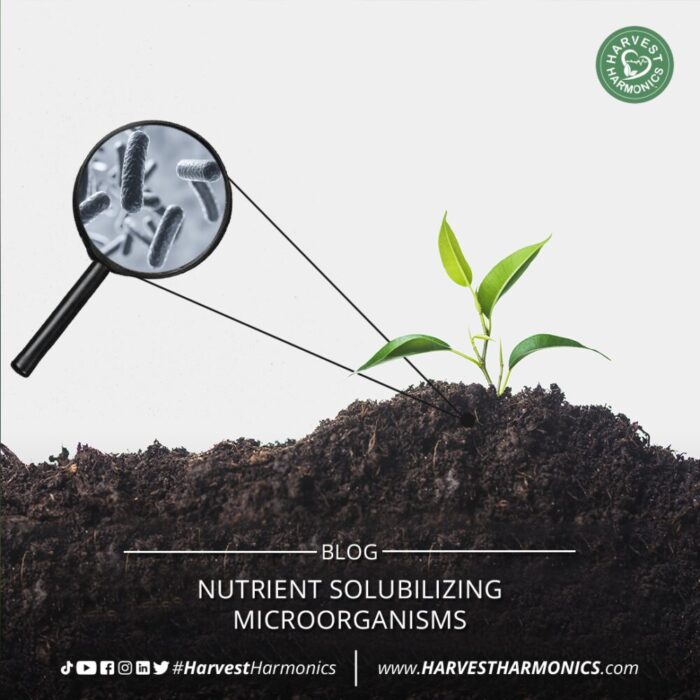
Nutrient Solubilizing Microorganisms
The microorganisms of the rhizosphere have maintained a close relationship with plants since the latter began to colonize the earth and have contributed to the maintenance, functioning and stability of ecosystems through their influence on the diversity of species in plant communities. This relationship has favored a mechanism of symbiotic association for the acquisition of nutrients and water by the plant and carbon by the microsymbiont.
However, agricultural activities have altered natural communities to achieve greater productivity per unit area and, as a consequence of this anthropocentric activity, the degradation of agricultural systems has accelerated, as in the case of the genetic diversity of Rhizobium, which by Due to some agricultural practices or chemical fertilization based on NPK, a decrease in genetic diversity has been observed in the nodule population of some Phaseolus vulgaris cultivars.
The need to reduce the use of chemical fertilizers and synthetic phytosanitary products has given way to the practice of inoculation and the use of so-called biofertilizers, which are formulated from microorganisms that inhabit the soil and are involved in the plant nutrition and growth. At present, the study and application of biofertilizers from phosphate-solubilizing microorganisms, as well as plant growth-promoting bacteria and nitrogen-fixing bacteria, have been widely extended.
Some phosphate solubilizing microorganisms can show other plant growth promoting activities such as production of indole acetic acid (IAA), gibberellic acid, cytokinins, ethylene, hydrocyanic acid (HCN), asymbiotic nitrogen fixation and resistance to soil pathogens; these characteristics are necessary for a microorganism to be considered a potential and efficient bioinput.
Nitrogen-fixing microorganisms, phosphorus and potassium solubilizers are widely distributed in a great diversity of soils and agricultural crops, only some show greater activity than others and only some species can be used in the formulation of biofertilizers with agricultural application. The inoculation of consortia of microorganisms can increase the microbiological diversity of the soil, especially in impoverished or depleted soils, allowing the use of their mineral stock and improving the conditions for crop development. If you would like to know more about our technology, contact us on our website www.harvestharmonics.com
Source:
Velazquez G. A, Ramos A. M. P. (2015). Benefits of P and K solubilizing microorganisms in the recovery and maintenance of agricultural soils. avocadosource.com
Beltran P.M.E. (2014). Phosphate solubilization as a microbial strategy to promote plant growth. Corpoica Agricultural Science and Technology. scielo.org
Press Room
Agricultural Technology for Farmers in India
Harvest HarmonicsTM New Biophysics Agricultural Technology For Farmers In India The Agricultural Biophysics technology, 20…
1
Organic Earth Tech, OETI, Launches One Million Dollar Technology
After hurricanes Maria and Irma, Puertorrican farmers are yet to receive the needed aid to recover. Organic Earth Tech…
0
Produce More From Less
CEO Harvest Harmonics Frank Arlia speaking at Replenish. Earth interview by Tia Kansara – London Climate Action Week. How…
0
Replenish Earth and the Environmental RE Talk Series
Replenish Earth and the environmental RE Talk Series event that reunited the top thinkers in the world Harvest Harmonics…
1