logologo

  • Home
  • Our Products
    • Yield Max Program
  • Results
  • The Science
    • TRL9
    • Science Documents
    • Science Documents (Spanish)
  • About Us
    • Global Representatives
    • Harvest Harmonics Video Gallery
    • Our Blog
    • Frequently Asked Questions
  • Contact Us
  • Cart
logologo

  • Home
  • Our Products
    • Yield Max Program
  • Results
  • The Science
    • TRL9
    • Science Documents
    • Science Documents (Spanish)
  • About Us
    • Global Representatives
    • Harvest Harmonics Video Gallery
    • Our Blog
    • Frequently Asked Questions
  • Contact Us
  • Cart
  • Home
  • Our Products
    • Yield Max Program
  • Results
  • The Science
    • TRL9
    • Science Documents
    • Science Documents (Spanish)
  • About Us
    • Global Representatives
    • Harvest Harmonics Video Gallery
    • Our Blog
    • Frequently Asked Questions
  • Contact Us
  • Cart

Citrus

Case Study: 20% Larger Size & Better Quality Fruit — Sunburst Citrus, Bakersfield California | Harvest Harmonics
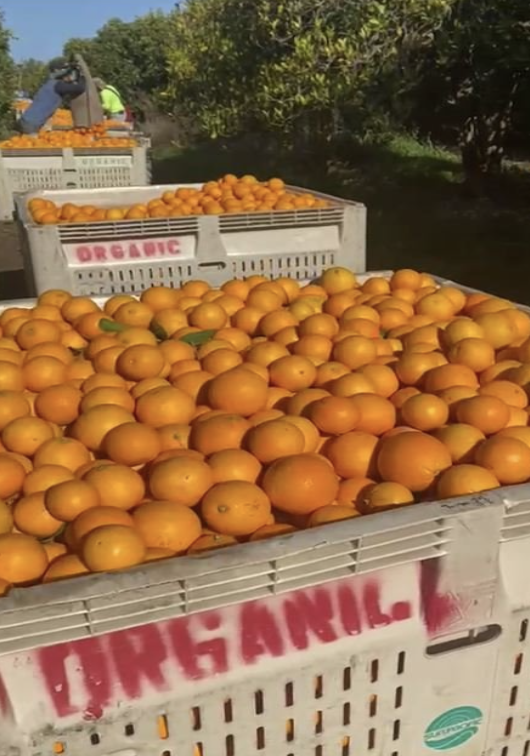
🍊 Organic Oranges · Bakersfield, California
Fruit per Tree — Net Gain vs. Historical Avg
+53%
Largest production in 53 years — record-setting harvest on a 100-acre organic grove
Orange Size — Net Gain vs. Historical Avg
20–30% Larger
Consistently bigger fruit across the grove — premium grade quality throughout
Sunburst Citrus · 100 Acres Organic
Bakersfield, California · 2023
Sunburst Citrus — 100-Acre Organic Orange Grove
📍 Bakersfield, California, USA
Crop
Organic Oranges
Date
2023
Country
🇺🇸 USA
Grove Size
100 Acres
Farming Type
Certified Organic
Technology
Kyminasi Fruits™

Kyminasi Fruits™ technology was installed on Sunburst Citrus's 100-acre certified organic orange grove in Bakersfield, California. Results are reported as net gain over prior years' historical average values — making this one of the most compelling long-term benchmarks in the Kyminasi case study library.

🏆
Largest Production in 53 Years
Sunburst Citrus confirmed this harvest was the highest-yielding season in the grove's 53-year history — achieved in the first year of Kyminasi Fruits™ installation.
Results — Net Gain Over Prior Years Historical Average · Sunburst Citrus · 2023
+53%
More fruit per tree vs. historical average — the highest yield ever recorded on this grove
Record Harvest
20–30%
Larger orange size vs. historical average — consistently bigger fruit across the entire 100-acre grove
Larger Fruit
Higher
Overall fruit quality — Kyminasi Fruits™ produced oranges with improved quality alongside the yield gains
Better Quality
Measurement Prior Years (Historical Average) 🍊 Kyminasi Fruits™ — 2023
Orange Size Increase Baseline (Historical Avg) +20–30% Larger
Fruit per Tree Increase Baseline (Historical Avg) +53% More Fruit
Overall Fruit Quality Baseline (Historical Avg) Higher Quality
Season Benchmark 53 Years of Prior Seasons Largest Production in 53 Years

Results represent net gain over prior years' historical average values — not a side-by-side control field comparison. Reported by Sunburst Citrus, Bakersfield, California, 2023.

🏆 Record-Setting Season — 53 Years
Sunburst Citrus confirmed that 2023 represented the largest production in the grove's 53-year history. This wasn't a modest improvement over last year — it was the highest-yielding season ever recorded on the property. That result was achieved in the first season of Kyminasi Fruits™ installation.
📈 +53% More Fruit per Tree
Compared to the grove's own historical average, each tree produced 53% more fruit in the Kyminasi Fruits™ season. At 100 acres of organic orange trees, this kind of per-tree improvement compounds into a dramatically larger total harvest — without adding land, changing inputs, or altering organic certification status.
🍊 20–30% Larger Fruit Size
Beyond quantity, the size of each orange increased by 20–30% vs. the historical average. In the citrus market, fruit size is a primary determinant of grade and price — larger fruit consistently commands premium prices. Producing more fruit that is also larger means a compounded advantage in both volume and per-unit revenue.
🌿 Organic Grove — No Additional Inputs
As a certified organic operation, Sunburst Citrus cannot use synthetic fertilizers, pesticides, or growth enhancers. Kyminasi Fruits™ works through the water delivery system — no chemicals, no additives, no change to organic certification. This makes it one of the very few technologies that can legally boost yield and quality on a certified organic farm.
Farm: Sunburst Citrus  ·  Location: Bakersfield, California, USA  ·  Year: 2023
Crop: Certified Organic Oranges  ·  Grove Size: 100 acres  ·  Technology: Kyminasi Fruits™
Benchmark: Net gain over prior years' historical average  ·  Headline: Largest production in 53 years

What makes this case study extraordinary is the benchmark used: not a side-by-side control field, but the grove's own 53-year historical record. A 53% increase in fruit per tree over every prior season on record — combined with fruit that is 20–30% larger — isn't just a good year. It's a landmark result that redefines what this farm is capable of producing. For growers in California's competitive organic citrus market, where yield per acre and fruit grade determine profitability, Kyminasi Fruits™ delivered on both dimensions simultaneously.

Questions? Schedule a Free Zoom Appointment →
Case Study: 100% Faster Growth of Oranges — KR Citrus, Porterville California | Harvest Harmonics
🍊 Oranges · Porterville, California
Faster Growth Rate vs. Untreated Trees
2×
1-year-old KPCB trees surpassed the size & canopy of neighbor's 2-year-old untreated trees
Time to Visible Difference
Only 6 Weeks
Of KPCB-treated watering — then the owner noticed significantly more growth than normal
KR Citrus · Navel & Valencia
Porterville, California · 2020
KR Citrus
📍 Porterville, California, USA
Crop
Navel & Valencia Oranges
Date
2020
Country
🇺🇸 USA
Tree Age (KPCB)
1 Year Old
Comparison Trees
Neighbor's 2-Year-Old
Technology
Kyminasi KPCB™

KR Citrus in Porterville, California grows both navel and Valencia orange cultivars. The owner installed the Kyminasi Plants Crop Booster™ to test whether KPCB could accelerate development and bring his new one-year-old orange trees to maturity sooner — compressing the years it normally takes young citrus trees to reach productive canopy size.

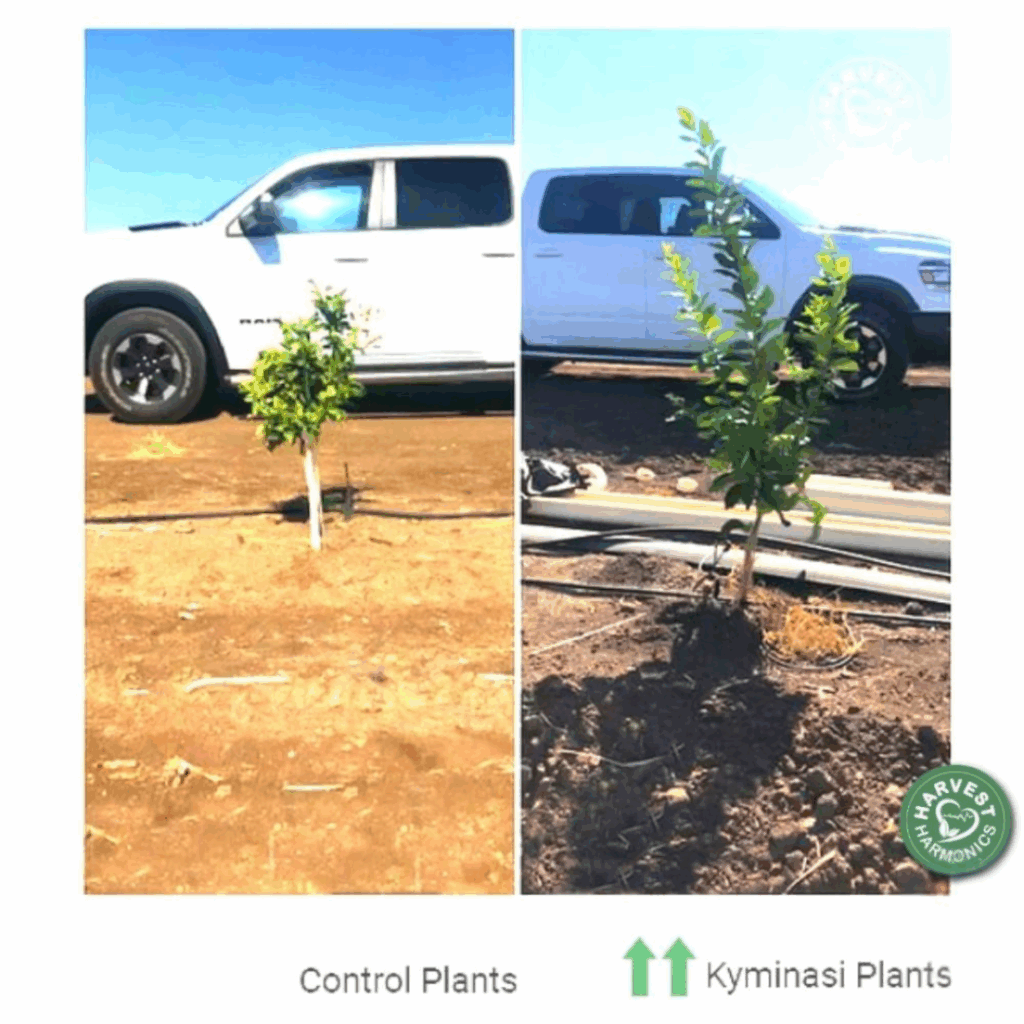
KR Citrus orange trees — 1-year-old KPCB trees vs. neighbor's 2-year-old trees, Porterville California 2020
Featured Video — Field Results
Growth Results — KR Citrus · Porterville, California · 2020
6 Wks
After just six weeks of KPCB-treated watering, the owner observed significantly more growth than normal
Fast Results
2×
KPCB's 1-year-old trees outgrew the neighbor's 2-year-old untreated trees in size and canopy density
100% Faster
Sooner
Time-to-maturity goal achieved — KPCB compressed the growth timeline that normally takes years in citrus
Goal Achieved
🌱 6 Weeks to a Visible Difference
After only six weeks of watering with KPCB-treated water, the owner of KR Citrus noticed significantly more growth than normal in his new trees. In a crop where meaningful visual change typically takes months or years, six weeks was enough for the difference to be unmistakable — in both the size and the canopy density of the young orange trees.
🏆 1-Year-Old Trees Beat 2-Year-Old Trees
The most striking finding: KR Citrus's one-year-old KPCB trees were significantly more developed than the neighbor's trees that had been planted two years ago. Trees that should have been half the age of the comparison group had already surpassed them in size and canopy development — a result the grower described as a 100% faster growth rate.
⏱️ Why Time-to-Maturity Matters in Citrus
Citrus trees are a long-term investment. New plantings typically take 3–5 years before they produce a meaningful commercial harvest. Every year shaved off that timeline is a year of revenue moved forward — and a year of input costs (water, labor, land) that now generates a return. Accelerating canopy development by a full year is commercially significant at any scale.
🍊 Navel & Valencia — Both Cultivars
KR Citrus grows both navel and Valencia orange cultivars — two of California's most commercially important orange varieties. The accelerated growth observed at KR Citrus demonstrates that KPCB's effect on young tree development is not cultivar-specific, supporting its potential for broad application across California's diverse citrus-growing regions.
Farm: KR Citrus  ·  Location: Porterville, California, USA  ·  Year: 2020
Crop: Navel & Valencia Oranges  ·  Tree age (KPCB): 1 year  ·  Comparison: Neighbor's 2-year-old untreated trees
Result: 100% faster growth rate — 1-yr KPCB trees surpassed 2-yr control trees after only 6 weeks of KPCB watering

The KR Citrus result is one of the most visually intuitive case studies in the Kyminasi library: a tree that is literally one year younger — having received only six weeks of KPCB-treated water — physically surpassing trees that have had two full growing seasons of conventional irrigation. It's a comparison any grower can immediately understand and value. For citrus operations making new plantings, the potential to compress the unproductive establishment period by a year or more represents a meaningful acceleration of return on investment.

Questions? Schedule a Free Zoom Appointment →
Case Study: Increased Growth & Faster Growth Rate of Tangerines — La Calera Farm, Chincha Peru | Harvest Harmonics
🍊 Tangerines · Chincha, Peru
Increase in Growth Rate vs. Control
+30%
Faster growth rate after just 26 days of treatment — control showed 0% increase
Time to Visible Difference
26 Days
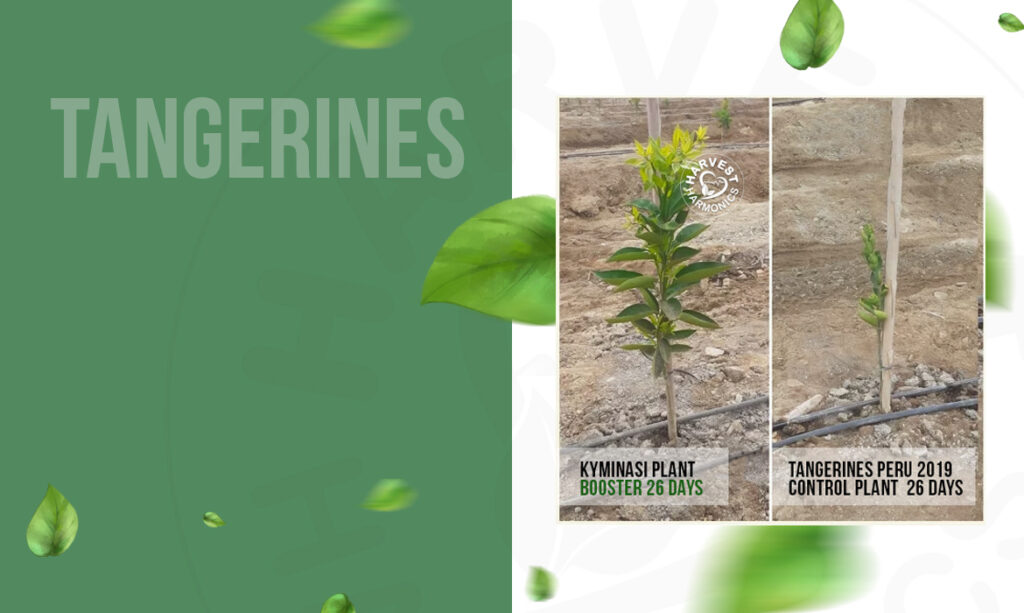
Earlier flowering, more leaves, brighter pigment, and 5 cm more height than control
La Calera Farm · 1.5 ha
Chincha, Peru · 2020
La Calera Farm
📍 Chincha, Peru
Crop
Tangerine Trees
Date
Dec 2019 – 2020
Country
🇵🇪 Peru
Grove Size
1.5 ha (3.75 acres)
Seedling Age at Start
~1 Month Old
Technology
Kyminasi KPCB™

The Kyminasi® Crop Booster™ was installed on 1.5 hectares of a tangerine grove at La Calera Farm in Chincha, Peru in December 2019. The tangerine seedlings were approximately one month old when the trial began. By the 26-day mark, measurable differences in growth rate, canopy development, height, and leaf color were already clearly visible between the KPCB-treated and control trees.

Growth Results — KPCB Trees vs. Control Trees · La Calera Farm · Chincha, Peru
+30%
Faster growth rate in KPCB trees vs. 0% increase in control trees — measured after 26 days of treatment
KPCB Trees
+5 cm
More height in KPCB trees vs. control — measurable gain in height alongside faster flowering and more leaves
Taller Trees
3 mo.
Development stage resembled 3-month-old trees — despite the KPCB trees being only 2 months old at the time
Ahead of Schedule
Measurement Control Tangerine Trees 🍊 KPCB Tangerine Trees
Overall Growth Slower and flowered later Faster, flowered earlier, and more leaves — after 26 days of treatment
Increase in Growth Rate 0% +30%
Increase in Height 0 cm +5 cm
Leaf Color Lighter green Brighter green
Tree Health (Leaf Pigment) No brighter pigment — less healthy Brighter pigment — healthier trees
🌱 30% Faster Growth in 26 Days
After just 26 days of KPCB-treated irrigation, the tangerine trees at La Calera Farm showed a 30% higher growth rate compared to the control trees — which registered 0% additional growth rate. The KPCB trees also flowered earlier and produced more leaves, indicating a more vigorous and accelerated development cycle from the earliest stage of growth.
📅 2-Month Trees Developing Like 3-Month Trees
The farmer observed that the 2-month-old KPCB tangerine trees looked and behaved like 3-month-old trees. This means KPCB effectively compressed a full month of natural development into half the time — allowing young citrus trees to reach key growth milestones weeks ahead of their normal timeline without any additional fertilizers or inputs.
🍃 Brighter Leaf Color = Healthier Trees
The KPCB tangerine trees produced brighter green leaves with more vivid pigment compared to the lighter green foliage of the control trees. Leaf pigment intensity is a reliable visual indicator of chlorophyll concentration — more chlorophyll means more photosynthetic capacity, better nutrient uptake, and overall healthier tree physiology.
💡 Why Early Growth Matters in Citrus
In citrus cultivation, the establishment phase is the most costly period per unit of future yield. Young trees consume inputs — water, labor, land — without yet producing a commercial return. Accelerating that window by a month or more, as demonstrated here, moves the break-even point forward and improves the long-term economics of every new planting at La Calera Farm.
Farm: La Calera Farm  ·  Location: Chincha, Peru  ·  Year: 2020
Crop: Tangerine Trees  ·  Grove: 1.5 hectares (3.75 acres)  ·  Seedling age at trial start: ~1 month
Key result: +30% growth rate, +5 cm height, earlier flowering — all within 26 days of KPCB treatment

The La Calera trial is one of the earliest-stage KPCB citrus trials on record — starting with seedlings only one month old. The fact that measurable, multi-variable differences (growth rate, height, flowering timing, and leaf health) appeared within just 26 days of treatment suggests KPCB acts at the cellular level from the very beginning of the plant's life cycle. For tangerine growers managing young orchards, these results point to a fundamentally more productive establishment phase — one that could translate into earlier first harvests and a stronger long-term yield curve.

Questions? Schedule a Free Zoom Appointment →
Case Study: Reduced Pest Incidence, Healthier Foliage & Stronger Roots — Trapani Farm Lemons, Peru | Harvest Harmonics
🍋 Lemons · Northern Peru
Pest Incidence Reduction — 12 Weeks
−31%
Leaf screwworm dropped from 16% to 11% — documented by the farm agronomist
Time to Visible Foliage Improvement
9 Weeks
Significantly brighter green foliage and better overall plant color vs. control trees
Trapani Farm · Lemon Trees
Northern Peru
Trapani Farm
📍 Northern Peru
Crop
Lemon Trees
Country
🇵🇪 Peru
Technology
Kyminasi KPCB™
Foliage Result
9 Weeks
Pest Result
12 Weeks
Documented By
Farm Agronomist

The Kyminasi Plants Crop Booster™ was installed on a lemon tree field at Trapani Farm in northern Peru. The farm's own agronomist monitored the trial, tracking foliage health, pest incidence, and root development across KPCB-treated and control trees over a 12-week observation period.

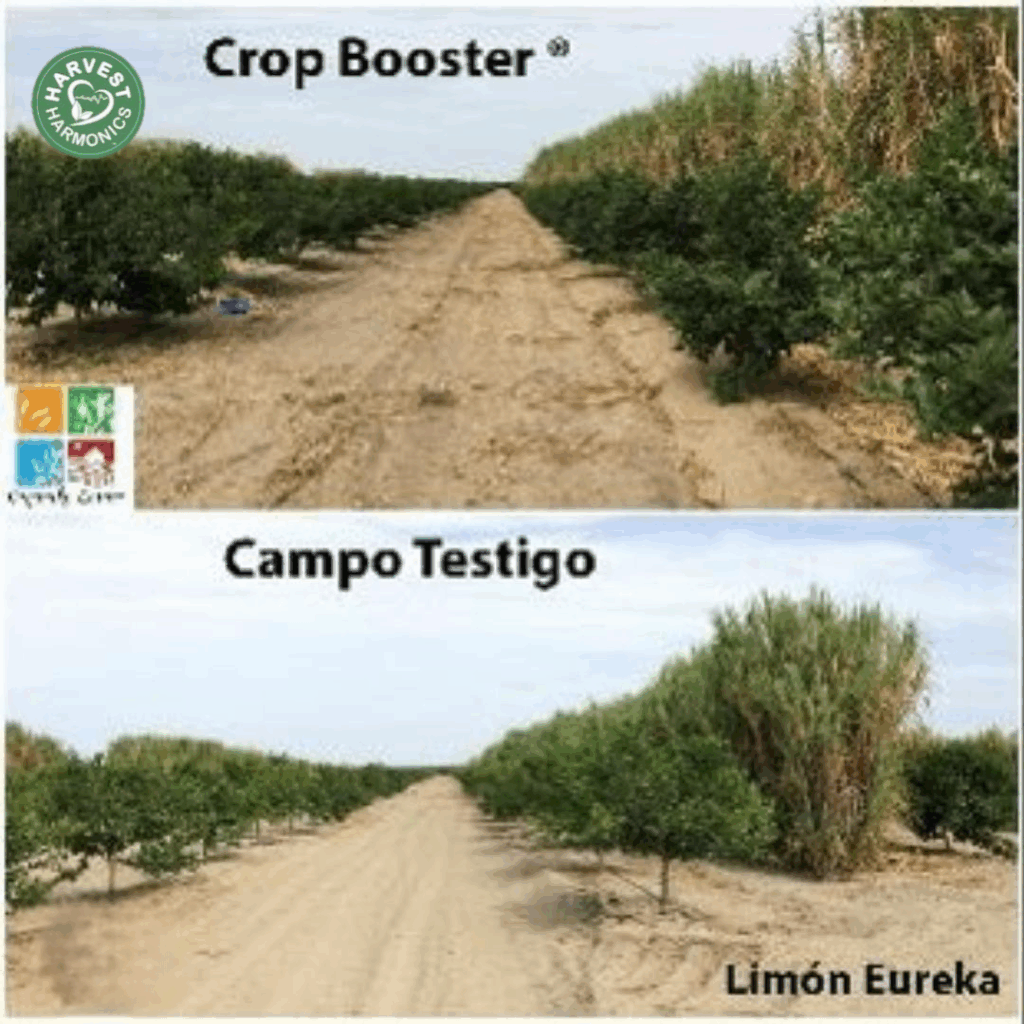
Lemon crop comparison — KPCB-treated trees vs. control trees, Trapani Farm Peru
KPCB-treated lemon trees (left) vs. untreated control trees (right) — Trapani Farm, Northern Peru
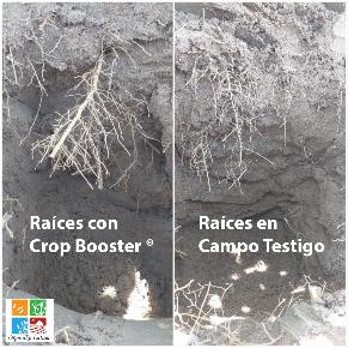
Lemon root system comparison — KPCB trees showing larger and more developed roots, Trapani Farm Peru
Root system comparison — KPCB lemon trees developed larger and more extensive root systems than the control trees
Results — KPCB Lemon Trees vs. Control Trees · Trapani Farm · Northern Peru
−31%
Leaf screwworm incidence — down from 16% to 11% in just 12 weeks, indicating increased disease resistance
Less Pests
9 Wks
To significantly brighter green foliage and better overall plant color vs. control trees — visible, documented improvement
Healthier Trees
Larger
Root systems in KPCB trees — more developed and extensive roots vs. control trees, documented at Trapani Farm
Stronger Roots
🍃 Brighter Foliage After 9 Weeks
After 9 weeks of KPCB-treated irrigation, the lemon trees at Trapani Farm showed significantly brighter green foliage and better overall plant color compared to the control trees. Leaf color intensity is a direct indicator of chlorophyll concentration — brighter green means more active photosynthesis, stronger nutrient uptake, and a healthier overall plant system.
🐛 Leaf Screwworm: 16% → 11% in 12 Weeks
The farm's own agronomist documented that the presence of the leaf screwworm dropped from 16% to 11% on the KPCB lemon trees in just 12 weeks — a 31% reduction in incidence. The control trees showed no equivalent improvement. This result points to KPCB enhancing the plant's own natural defense mechanisms, reducing vulnerability to pest pressure without additional pesticide inputs.
🌿 Larger, More Developed Root Systems
The KPCB lemon trees developed larger and more extensive root systems than the control trees over the same period. A stronger root system directly improves a tree's ability to absorb water and nutrients, withstand drought stress, and anchor itself against wind and soil movement — all critical factors for long-term citrus health and productive lifespan.
📋 Agronomist-Documented Trial
This trial was independently monitored by Trapani Farm's own agronomist — not just observed by the grower. Professional agronomist documentation adds a layer of credibility to the findings, confirming that the improvements in foliage health, pest incidence, and root development were formally assessed and recorded under standard field observation practices.
Farm: Trapani Farm  ·  Location: Northern Peru  ·  Crop: Lemon Trees
Documented by: Farm agronomist  ·  Foliage improvement: 9 weeks  ·  Pest reduction: 16% → 11% screwworm incidence in 12 weeks (−31%)
Additional finding: Larger, more developed root systems in KPCB trees vs. control

The Trapani Farm trial stands out because it captures three distinct, independently valuable outcomes in a single field: improved foliage health, measurable pest resistance, and stronger root development. Each of these outcomes has direct commercial implications — healthier leaves mean more photosynthetic capacity; fewer pests mean lower pesticide costs and less crop loss; larger roots mean better resilience to drought and stress. Together, they paint a picture of a fundamentally stronger tree — one that is better equipped to produce more fruit, more consistently, over a longer productive lifespan.

Questions? Schedule a Free Zoom Appointment →
Case Study: 55% Yield Increase of Limes in Colombia | Harvest Harmonics
🍋 Tahiti Limes · Colombia
Yield Increase vs. Control Field
+55%
More limes harvested — same inputs, only KPCB-treated irrigation water differed
Pest & Disease Incidence
Zero in KPCB Field
No presence of pests or diseases — vs. control plants which were affected
Tahiti Limes · April 2021
Colombia
Tahiti Lime Field
📍 Colombia
Crop
Tahiti Limes
Date
April 2021
Country
🇨🇴 Colombia
Yield Increase
+55% vs. Control
Pest Incidence
None (KPCB Field)
Technology
Kyminasi KPCB™

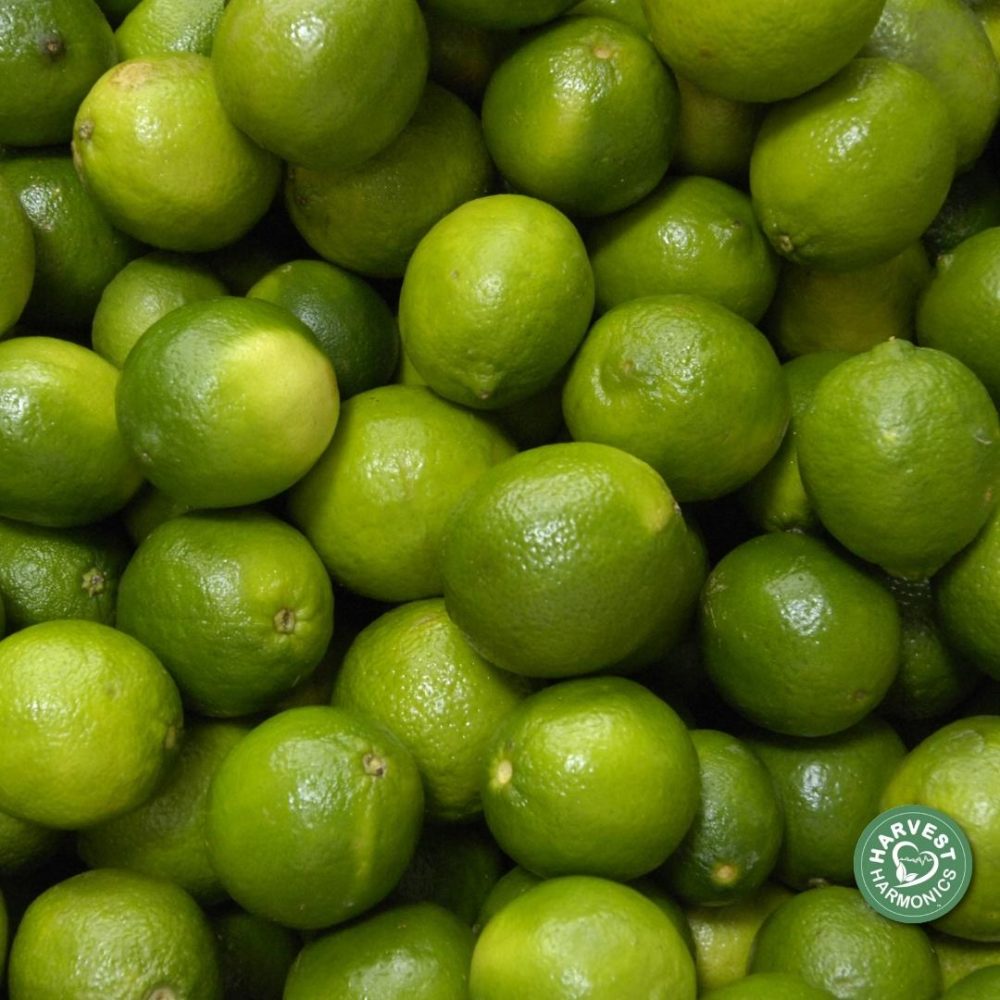
The Kyminasi Plants Crop Booster™ was installed on a field of Tahiti lime plants in Colombia. At harvest, the KPCB-treated field was compared against the untreated control field across yield, plant vigor, foliage color, tillering, and pest and disease presence — delivering results across every measured dimension.

Tahiti lime field — Kyminasi KPCB 55% yield increase, Colombia April 2021
Results — KPCB Field vs. Control Field · Tahiti Limes · Colombia · April 2021
+55%
Total yield increase of Tahiti limes vs. the untreated control field at harvest
Higher Yield
Zero
Pests or diseases in the KPCB field — control plants showed pest and disease presence
Pest Free
4 of 4
Quality indicators improved — vigor, foliage color, tillering, and pest resistance all favored KPCB
All Metrics
🍋 +55% More Limes at Harvest
The KPCB-treated Tahiti lime field produced 55% more fruit than the untreated control field under the same growing conditions. For a lime operation in Colombia — where margins depend directly on volume per hectare — a yield advantage of this magnitude translates into a transformative improvement in seasonal revenue without requiring additional land or infrastructure.
🛡️ Zero Pests or Diseases in KPCB Field
One of the most striking results: the KPCB-treated lime plants showed no presence of pests or diseases, while the control plants were affected. This is consistent with KPCB's documented effect of strengthening plant immune response and cellular resilience — producing plants that are naturally better equipped to resist pest pressure without additional chemical interventions.
💪 Greater Vigor & More Intense Green Color
The KPCB lime plants showed greater overall vigor and more intense green foliage compared to the control. Deeper green color reflects higher chlorophyll concentration, which means more efficient photosynthesis, stronger energy production, and a plant that is performing at a higher biological level — all of which contribute directly to the larger harvest.
🌿 Greater Tillering
The KPCB plants also showed greater tillering — more lateral shoot development — compared to the control. Greater tillering means more fruiting sites per plant, which is one of the structural reasons behind the 55% yield increase. A plant with more productive branches simply has more capacity to bear fruit during the harvest season.
Location: Colombia  ·  Date: April 2021  ·  Crop: Tahiti Limes
Yield increase: +55% vs. control field  ·  Pest incidence: Zero in KPCB field  ·  Additional observations: Greater vigor, more intense green color, greater tillering

The Colombia lime trial is notable for the breadth of its results: a 55% yield increase paired with zero pests or diseases and improvements across every quality indicator observed. This combination — more fruit, healthier plants, and no pest pressure — is the outcome of a plant system operating at an elevated level of biological efficiency. For lime growers in Colombia managing pest pressure and yield variability, KPCB delivered on all fronts simultaneously.

Questions? Schedule a Free Zoom Appointment →
Prev
Next

Harvest Harmonics

We help farmers to increase their crop yield and profit and improve the quality of their products. We have the most advanced crop booster technology in agriculture.

Useful Links

  • About Us
  • Blog
  • Succeses
  • Contacts Us
  • Get a Free Quote

Contact Info

  • geo611 Druid Rd, E Building 201
    Clearwater, FL 33756, USA
  • phone+1 727 324 6750
  • mailservice@harvestharmonics.com
  • mailMon – Fri: 08:00 a.m. – 6:00 p.m. ET

Social Media