A Looming Crisis: Rising Input Costs Threaten Global Food Security
The agriculture industry, a cornerstone of global food security, is grappling with a severe crisis: escalating input costs. This trend, often referred to as “agflation,” is significantly impacting farmers’ profitability and food security.
The Mounting Crisis
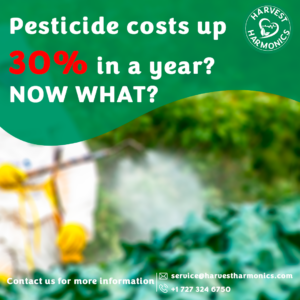
According to a recent report by the Food and Agriculture Organization (FAO), global fertilizer prices have surged by over 30% in the past year. This, coupled with rising fuel costs and labor shortages, is squeezing farmers’ profit margins. A study by the World Bank estimates that a 10% increase in input costs can lead to a 3-5% reduction in agricultural productivity.
The Impact on Farmers and Consumers
The consequences of rising input costs are far-reaching:
- Reduced Profit Margins: Farmers are facing declining profit margins, making it difficult to sustain their livelihoods and invest in their operations.
- Increased Debt: Many farmers are resorting to debt to cover increased input costs, further exacerbating financial stress.
- Reduced Investment: Lower profits can lead to reduced investment in technology, research, and sustainable practices.
- Food Price Inflation: Rising input costs are often passed on to consumers in the form of higher food prices.
- Food Security Risks: In extreme cases, farmers may be forced to reduce production or abandon farming altogether, leading to food shortages and food insecurity.
A Ray of Hope: Innovative Solutions
To address these challenges, innovative solutions are needed. One such solution is the Harvest Harmonics Crop Booster. By harnessing the power of biophysical signaling, this technology can enhance plant growth, improve water use efficiency, and boost crop yields. By reducing reliance on costly chemical inputs and optimizing resource use, Harvest Harmonics Crop Booster can help farmers mitigate the impact of rising input costs and ensure a sustainable future for agriculture.
By embracing innovative technologies like Harvest Harmonics Crop Booster and implementing sustainable farming practices, we can mitigate the impact of rising input costs and ensure a sustainable future for agriculture and food security.
Boosting Oil Palm Growth: Superior Quality & Bigger Yields with KPB Technology!
- Plant Height 🌿
- The KPB-treated plants averaged 8.9 cm (3.5 in) taller than the control group.
- Stem Thickness 🌳
- The stems of the KPB plants were 2.5 cm (0.9 in) thicker than those of the control crop.
- Leaf Blade Area 🌿
- The leaf blade area also showed improvements, contributing to better overall plant health and robustness.
- Higher Crop Yields 📈
- Better Quality Produce 🥭
- Healthier and More Resilient Plants 🌿
Harvest Harmonics International CEO to Deliver Keynote at ICAATAS 2024
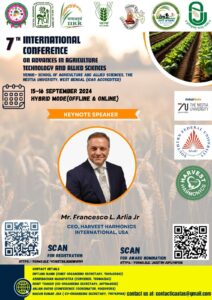
Clearwater, Florida – August 16th, 2024 – Harvest Harmonics International, a leading innovator in agricultural technology, proudly announces that its CEO and Founder, Francesco Arlia Jr., will deliver a keynote address at the 7th International Conference on Advances in Agriculture Technology and Allied Sciences (ICAATAS 2024). The prestigious event will take place in a hybrid format on September 15-16, 2024, at The Neotia University, West Bengal, India.
Frank Arlia Jr. Invited by SARSD
Mr. Arlia was personally invited by the Society of Agricultural Research and Social Development (SARSD), the organizing body behind ICAATAS 2024. SARSD is an esteemed organization dedicated to fostering research and promoting knowledge exchange across all disciplines of agricultural science. Their invitation highlights Harvest Harmonics’ reputation as a key player in driving technological innovation for the agricultural sector.
Sharing Expertise on the Global Stage
“I am truly honored to have the opportunity to speak at ICAATAS 2024,” said Mr. Arlia. “This conference provides an important platform for exploring how technological advancements can address the growing challenges faced by agriculture globally. I look forward to sharing our experiences at Harvest Harmonics and discussing how our Kyminasi Crop Booster technology is making a real impact on crop health and yields. Engaging with other leaders in the field, researchers, and policymakers will be invaluable as we collectively strive to shape the future of sustainable agriculture.”
About ICAATAS 2024
The 7th International Conference on Advances in Agriculture Technology and Allied Sciences (ICAATAS 2024) brings together experts from all over the world, including researchers, industry professionals, and policymakers. The event focuses on the latest developments in agricultural technology and covers an array of subjects like agronomy, horticulture, plant pathology, entomology, and agricultural engineering. ICAATAS 2024 is recognized as one of the premier forums for collaboration, insight sharing, and exploring cutting-edge solutions that drive the future of global agriculture.
With the participation of renowned figures like Mr. Arlia, the conference promises to be an essential event for anyone invested in advancing agricultural practices and technologies.
Effectiveness of the Crop Booster Device in Pepper Cultivation
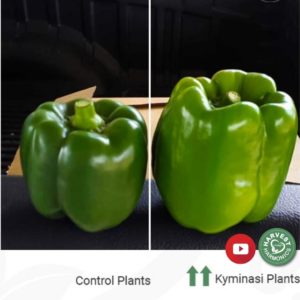
Implementing advanced technologies in agriculture, such as an irrigation system combined with innovative devices, has significantly impacted crop productivity and profitability. This analysis evaluated three pepper varieties—Cubanelle, Wonder, and Marconi—using the Crop Booster device and compared the results in terms of the number of fruits, their length, weight, and overall yield.
Key Findings
Quantity and Quality of Fruits
The Cubanelle variety stood out notably in the number of fruits produced when the irrigation system was used alongside the Crop Booster device. On average, 20.9 fruits per plant were obtained, with an average length of 9.37 cm. On the other hand, although the Wonder variety did not surpass Cubanelle in the number of fruits, it did exceed in weight, also outperforming the Marconi and Cubanelle varieties. This suggests that the device not only improves the quantity but also the quality of the fruits in terms of size and weight.
Crop Yield
The pepper crop yield showed a clear improvement with the use of the Crop Booster device. The treatment that included this device resulted in a superior yield of 8621.67 kg/ha. In terms of variety, Wonder again stood out, achieving average yields ranging from 7835.5 to 21837 kg/ha. These results confirm the positive effect of the device in combination with a high-yield potential variety.
Profitability
The profitability evaluation revealed that the combination of the irrigation system and the Crop Booster device with the Wonder variety was the most profitable, reaching 137.51%. This figure is followed by the Marconi variety without the device, with a profitability of 130.04%. All other treatments achieved profitabilities above 99.75%, indicating that even without the device, improved irrigation practices significantly contribute to the crop’s profitability.
Final Conclusions
The data presented confirm that the application of the irrigation system along with the Crop Booster device has a positive and significant impact on pepper cultivation. The main conclusions are:
1. Increase in Quantity and Quality of Fruits: The Cubanelle variety showed a notable increase in the number of fruits, while Wonder excelled in fruit weight, demonstrating the device’s effectiveness in improving both parameters.
2. Improvement in Crop Yield: The total crop yield increased significantly with the use of the device, especially in the Wonder variety, highlighting its potential to boost productivity.
3. High Profitability: The profitability achieved with the use of the Crop Booster device and the irrigation system was considerably high, especially with the Wonder variety, making this combination a highly viable option for farmers looking to maximize their profits.
In conclusion, integrating advanced technologies such as the Crop Booster device into irrigation systems can significantly transform the productivity and profitability of pepper crops. Selecting appropriate varieties, like Wonder, in combination with these technologies, results in substantial economic benefits, ensuring more efficient and profitable production.
Summer Citrus Success: KR Citrus Doubles Young Orange Tree Growth with KPB Technology!
Porterville, California (July 2020)
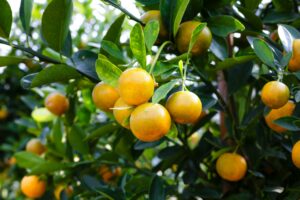
– It’s a summer of sunshine and citrus triumphs in Porterville, California, thanks to KR Citrus, a local grower specializing in navel and Valencia oranges. This season, they’ve achieved remarkable results using innovative Kyminasi Plant Booster (KPB) technology, paving the way for a future filled with “Summer Citrus Success.”
Doubling Down on Growth: Young Trees Thrive in Record Time
KR Citrus implemented KPB with a specific goal: accelerate the growth of their young orange trees. The results were beyond expectations. After just six weeks of watering with KPB, owner Jim Reed noticed a dramatic difference in the size and canopy density of his one-year-old trees compared to untreated trees. In fact, these young KPB-treated trees were even more developed than his neighbor’s two-year-old trees! This translates to a 100% faster growth rate, effectively doubling the growth speed – a game-changer for any citrus grower seeking “Summer Citrus Success.”
KPB: Scientifically-Backed Benefits Beyond Growth Acceleration
KR Citrus’ experience is just one example of the many successes achieved with KPB. Our scientific research consistently backs these positive results. Studies conducted in other parts of the world have shown promising results in:
- Pest Reduction: A lemon farm in Olmos, Peru, using KPB, saw a significant decrease in leaf screwworm infestation, indicating increased pest resistance.
- Enhanced Root Development: The same Peruvian study also revealed that KPB-treated lemon trees had larger and more developed root systems, crucial for overall plant health and a key factor in long-term “Summer Citrus Success.”
- Yield Increase: In Colombia, KPB technology boosted Tahiti lime yields by an impressive 55% compared to untreated fields.
Unlock Your Own Summer Citrus Success Story
KR Citrus’ success story is a shining example of the potential of KPB technology to unlock “Summer Citrus Success” for growers everywhere. Are you a citrus grower looking to achieve faster growth, improved plant health, and potentially higher yields? Head over to our shop at boostergarden.com to explore how Kyminasi Plant Booster can revolutionize your citrus operation! Schedule your free Zoom appointment today to learn more about KPB and how our scientifically-backed approach can help you achieve your own summer citrus triumphs. Visit Our Science page for more results on all the crops.

Sustainable Agriculture… Is it worth it ?
In this issue, we will be talking about the transition to Sustainable Agriculture.
Sustainable agriculture is a way of farming that protects the environment and ensures the long-term productivity of the land. It’s a system of farming that seeks to balance the needs of people, the environment, and future generations.
There are many challenges to transitioning to sustainable agriculture, including:
- Lack of knowledge: Many farmers may not be familiar with sustainable farming practices. They may not know where to get started or how to make the transition.
- Cost: Sustainable farming practices can be more expensive than conventional farming practices. This is because they often require more labor and time.
Despite the challenges, there are many reasons why it is important to transition to sustainable agriculture. These include:
- Environmental benefits: Sustainable agriculture practices can help to reduce pollution, improve soil health, and conserve water.
- Economic benefits: Sustainable agriculture can be more profitable in the long run. This is because healthy soils are more productive and less prone to pests and diseases.
- Social benefits: Sustainable agriculture can help to improve the health of farmers and their families. It can also help to create jobs in rural communities.
If you are a farmer who is considering transitioning to sustainable agriculture, at Harvest Harmonics we will help you achieve that. Our technology boosts the natural ability of the plants. So they are able to absorb more out of the environment which means less inputs, less cost and the same or better yields.
We believe that sustainable agriculture is the future of farming, and we are committed to helping farmers make the transition.
If you are interested in learning more about how Harvest Harmonics can help you, please visit our website or contact us today.
I hope this information is helpful. Thanks for your time.
Wishing you a bountiful harvest,
Jim Kurtz
Senior Farm Consultant
Harvest Harmonics
Sustainable Agriculture: The Answer to the Challenges of the 21st Century
In this issue, we will discuss the challenges farmers face today.
We know that farming is a tough business, and we want to offer you our support.
As you know, farmers are facing a number of challenges, including:
- Climate change: Climate change is making it more difficult for farmers to grow crops. Extreme weather events, such as droughts and floods, are becoming more common and wreaking havoc on farms.
- Rising input costs: The cost of inputs, such as fertilizers and pesticides, is rising. This is making it more difficult for farmers to make a profit.
- Declining crop yields: Crop yields are declining in many parts of the world. This is due to a number of factors, including climate change, soil degradation, and pests and diseases.
These challenges are making it difficult for farmers to make a living. In some cases, they are even forcing farmers to leave farming altogether.
I know that these challenges can be overwhelming, but I want to assure you that you’re not alone. There are people who care about your success, and we’re here to help.
Harvest Harmonics is committed to helping farmers overcome these challenges. We believe that sustainable agriculture is the key to the future of farming.
We’ve listened to farmers and understand their challenges. We’re committed to providing farmers with the tools and resources they need to succeed. We believe that sustainable agriculture is the future of farming, and we’re here to help farmers make the transition.
We know that you’re busy, so we’ve made it easy for you to learn more about how we can help. You can visit our website or contact us today to learn more about THE CROP BOOSTER™.
Thank you for your time. We look forward to hearing from you soon.
If you are interested in learning more about how Harvest Harmonics can help you, please visit our website or contact us today.
I hope this newsletter has been helpful. We’re here to support you in any way we can. Please don’t hesitate to reach out if you have any questions.
Wishing you a bountiful harvest,
Jim Kurtz
Senior Farm Consultant
Harvest Harmonics
The Truth About Conventional Farming: It’s Not as Safe as You Think
In this issue, we will be talking about the dangers of conventional farming.
Conventional farming is a way of farming that uses synthetic fertilizers, pesticides, and herbicides to increase yields.
However, these chemicals can have serious negative consequences for the environment, human health, and the long-term productivity of the land.
Here are some of the dangers of conventional farming:
- Pollution: Synthetic fertilizers and pesticides can pollute our waterways and air. This can lead to health problems for people and animals, and it can also harm aquatic ecosystems.
- Erosion: Conventional farming practices can lead to soil erosion. This can reduce the fertility of the soil and make it more difficult to grow crops.
- Resistance to pests and diseases: Overuse of pesticides can lead to resistance in pests and diseases. This means that the pesticides become less effective, and farmers need to use more and more chemicals to control pests and diseases.
- Harm to human health: Exposure to synthetic chemicals can have serious health consequences for farmers, their families, and consumers. These chemicals have been linked to cancer, reproductive problems, neurological disorders, and other health problems.
- Degradation of the soil: Conventional farming practices can degrade the soil. This means that the soil loses its ability to hold water and nutrients, and it becomes less productive.
If you’re concerned about the dangers of conventional farming, there are many things you can do to reduce your exposure to these chemicals. You can:
- Use organic fertilizers and pesticides. Organic fertilizers and pesticides are made from natural materials, and they are less harmful to the environment and human health.
- Practice crop rotation. Crop rotation helps to reduce the build-up of pests and diseases in the soil.
- Use cover crops. Cover crops help to protect the soil from erosion and improve its fertility.
- Use Harvest Harmonics Crop Booster to enhance plant growth and yield while reducing the use of fertilizer, pesticides and water.
- Support sustainable farming practices. When you buy food that is produced using sustainable farming practices, you are helping to reduce the demand for conventional agricultural products.
I hope this information is helpful. Thanks for your time.
Wishing you a bountiful harvest,
Jim Kurtz
Senior Farm Consultant
Harvest Harmonics