

The Importance of Technology in Sustainable Agriculture
Nowadays, agriculture faces the great challenge of increasing productivity due to the rising demand of food worldwide. The efficiency in hydric and natural resources usage, climate change adaptation, respecting of the environment where the crops will take place, and the farmer’s cooperation within the decision-making process are a set of factors that, if executed correctly, will allow a sustainable agriculture overtime.
A crucial element is working with the production systems on their different stages and, especially, where raw material is found: the field. It is here where an emphasis on improving production should be.
Productivity’s dropage can be related to various aspects, like plants’ poor management in trimming or crop varieties that couldn’t adapt to the ground. Irrigation is a key factor too: more watering does not mean better crops. Likewise, extreme fertilization is deteriorating the yield’s soil and often destroys all life surrounding the plant’s environment, stalling its growth and development, as well as plagues, which can affect and usually end with farming production. A farmer can work with and control all of these elements through sustainable agriculture and adding technology to the field.
It doesn’t just go through a clearly “ground” or field subject, this agriculture must manage to protect the rural life of those who work in it and the social welfare. Having a work environment in the farming industry with the field worker will allow access to excellent results. This social responsibility is like a backpack that our line of work has been enhancing and giving space to in traditional agriculture.
In order to address and improve these matters, it must be managed hand by hand with technology. There is no agriculture that lasts in time without superior technology in their course of action, it has to be an ally with the purpose of increasing our planet’s crops.
With this idea in mind, Kyminasi Plant Booster technology takes place and Harvest Harmonics company is in charge of distributing it: to reach a sustainable agriculture, allowing the farmer to have vigorous and profitable crops in short and medium terms while taking care of the environment in which they develop.
By Arantza Castro
Press Room

Agricultural Technology for Farmers in India
Harvest HarmonicsTM New Biophysics Agricultural Technology For Farmers In India The Agricultural Biophysics technology, 20…
1

Organic Earth Tech, OETI, Launches One Million Dollar Technology
After hurricanes Maria and Irma, Puertorrican farmers are yet to receive the needed aid to recover. Organic Earth Tech…
0

Produce More From Less
CEO Harvest Harmonics Frank Arlia speaking at Replenish. Earth interview by Tia Kansara – London Climate Action Week. How…
0

Replenish Earth and the Environmental RE Talk Series
Replenish Earth and the environmental RE Talk Series event that reunited the top thinkers in the world Harvest Harmonics…
1
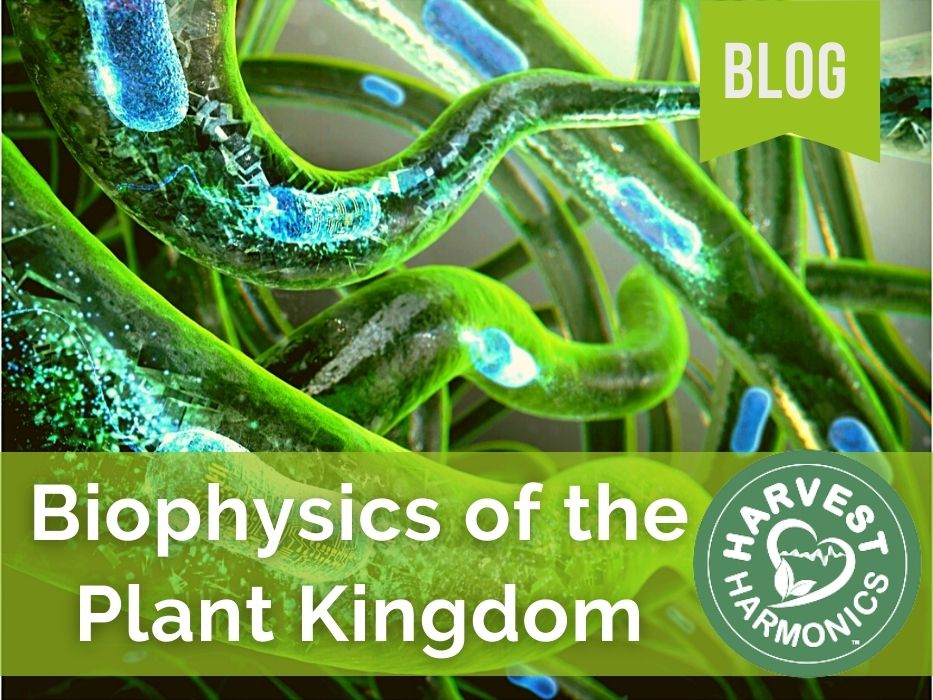
Biophysics of the Plant Kingdom
Biophysics is a science in which biology and physics converge, thus explaining biological processes complicated with physical phenomenon. In 1920, it questioned because biological systems do not follow the second law of thermodynamics but in a world where entropy never decreases, two cells could form an organism fully organized. Furthermore, Schrödinger wrote his book called What is Life, which form many, was the beginning of
Biophysics is present in each of the existing living beings, one of the most complex kingdoms is the plant, which has proven to have an infinite variety of permutations, and so studying it completely is almost impossible. Biophysics in plants is consider
In short, a plant formed of a root, a stem and leaves. The root absorbs nutrients from the soil through a permeable membrane, the stem is responsible for transport by microscopic tubes and the leaves are responsible for photosynthesis through a complex system of chromophores for the exchange of gases. The simple biophysical model of a plant is expressed as a capillary tube, with one end submerged in a solution delimited by a selective membrane and the opposite end in free contact with the atmosphere.
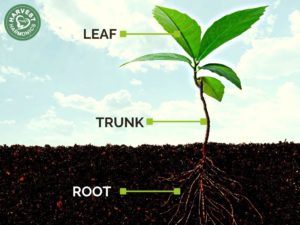
Due to osmosis, when there is a difference in gradient the water and nutrients flow from the root to the highest point of the plant where there will always be the lowest concentration of solutes. Due to the gradient, the plant will have moments of imbalance so through physiological mechanisms of the plant; roots adapt to rebalance the natural state of the plant.
At microscopic scales, the vibrations emitted by electrons make it possible to recognize any substance. These vibrations are fingerprints and are thus a highly reliable factor in scientific and industrial matters. Kyminasi Plant Booster recognizes each frequency emitted by the plants and intervenes resonance reaching the optimal frequency thus giving biological balance.
Biological balance allows plants to develop in a healthy way, without stress and with better results in quality and quantity, all this in an organic and sustainable way.
By Maria Belén Amaguaña
Press Room
Agricultural Technology for Farmers in India
Harvest HarmonicsTM New Biophysics Agricultural Technology For Farmers In India The Agricultural Biophysics technology, 20…
1
Organic Earth Tech, OETI, Launches One Million Dollar Technology
After hurricanes Maria and Irma, Puertorrican farmers are yet to receive the needed aid to recover. Organic Earth Tech…
0
Produce More From Less
CEO Harvest Harmonics Frank Arlia speaking at Replenish. Earth interview by Tia Kansara – London Climate Action Week. How…
0
Replenish Earth and the Environmental RE Talk Series
Replenish Earth and the environmental RE Talk Series event that reunited the top thinkers in the world Harvest Harmonics…
1
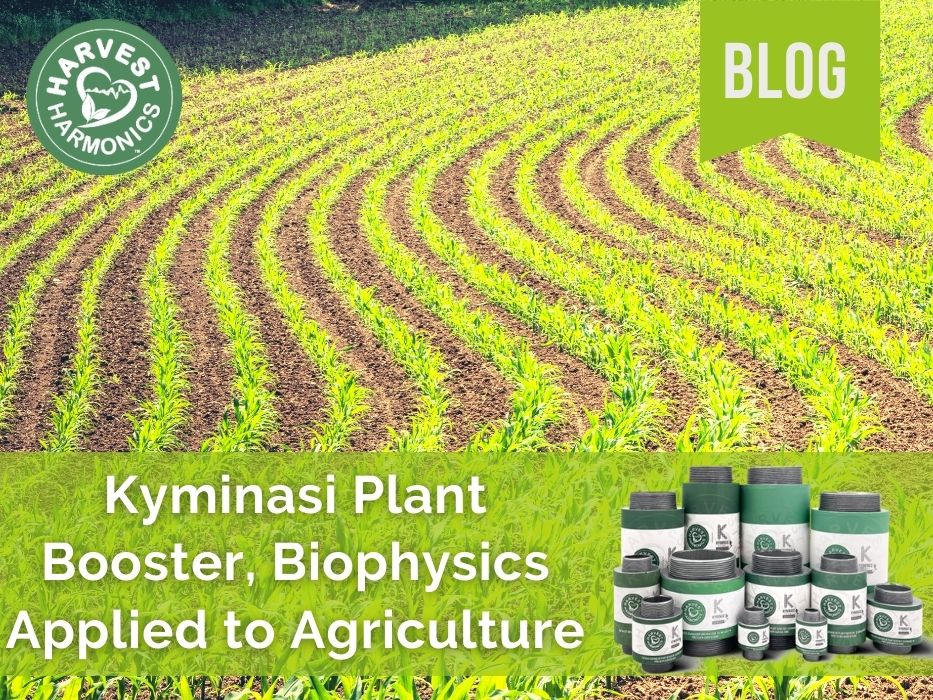
Kyminasi Plant Booster, Biophysics Applied to Agriculture
30 Days Summer School International Training Programme India

Agricultural Technology for Farmers in India
Harvest Harmonics Announces Breakthrough Rice Trial Results in Nepal
Harvest Harmonics Expands Its Reach: Bringing Innovative Agriculture Solutions to California and Florida

Organic Earth Tech, OETI, Launches One Million Dollar Technology

Produce More From Less