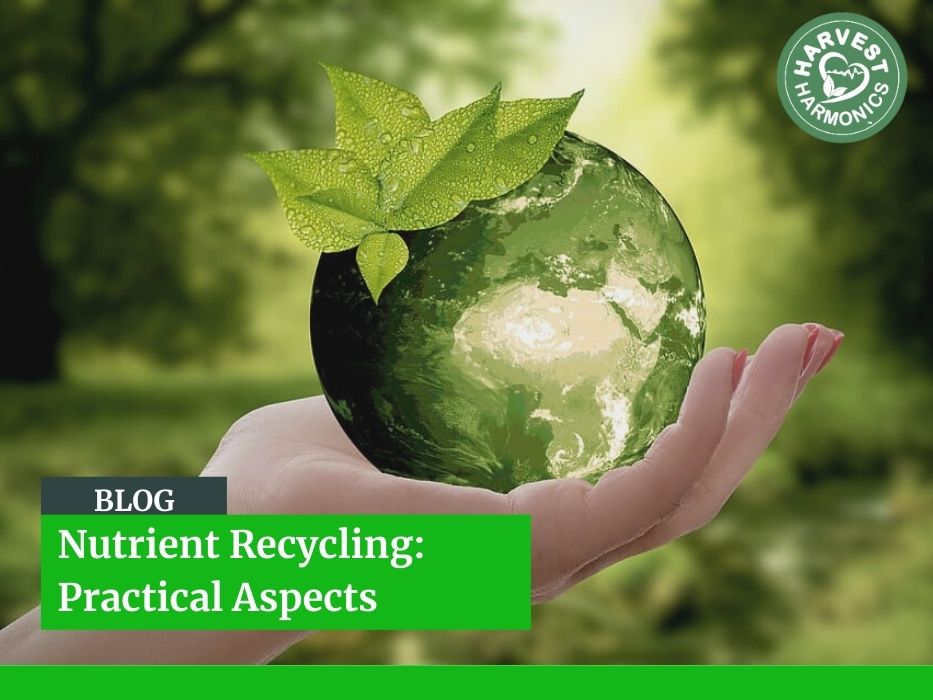
Nutrient Recycling: Practical Aspects
The soil system is complex, dynamic and diverse, in it are mineral substances, gaseous elements and a large number of living and decomposing plant and animal organisms.
Soil organic matter influences almost all important properties that contribute to soil quality, despite representing a small percentage of the weight of most soils (1% – 6%). The quality and quantity of organic matter can change the properties of the soil, a good management of it can improve the structure and availability of nutrients, as well as increase its biological diversity.
In the soil, organic matter can be differentiated into three phases:
1. Raw organic matter, made up of fresh and partially decomposed animal and vegetable waste.
2. Humus in formation, made up of advanced decomposition products of organic waste and products re-synthesized by microorganisms (carbohydrates, organic acids, nitrogenous compounds, lignins, etc.)
3. Stable humus, formed by strictly humic substances (humic acids, fulvic acids, humins, etc.), most of them bound to the mineral part of the soil.
It is important to point out that, although the terms organic matter and humus are often used interchangeably, they have different meanings; humus is the fraction of organic matter in the soil totally decomposed and relatively stable with great influence on the chemical properties of the soil.
Most of the nutrients that plants need for their growth and development are absorbed by the roots directly from the soil solution, (fraction of the water present in the soil that is available to be absorbed by the roots and that contains dissolved elements in assimilable forms); with the exception of carbon (C), hydrogen (H) and oxygen (O) that plants take mainly from CO2 from air and water and which account for more than 90% of their dry weight. For carbon, oxygen and nitrogen, the atmosphere functions as the main reservoir, while for phosphorus, calcium, sulfur, potassium, as well as for most micronutrients, the soil is the main reservoir.
Not all the nutrients present in the soil, or in the atmosphere are in a form available to plants, some must be transformed before they can be used, an example of this is atmospheric nitrogen, which through the biological fixation process carried out by some microorganisms it can be incorporated into the biomass of plants or into the soil. During the mineralization process, it can be converted to assimilable forms (ammonium and nitrate) by the roots and later returned to the atmosphere by different routes, as reflected in the geochemical cycle of this element.
Press Room

Agricultural Technology for Farmers in India
Harvest HarmonicsTM New Biophysics Agricultural Technology For Farmers In India The Agricultural Biophysics technology, 20…
1

Organic Earth Tech, OETI, Launches One Million Dollar Technology
After hurricanes Maria and Irma, Puertorrican farmers are yet to receive the needed aid to recover. Organic Earth Tech…
0

Produce More From Less
CEO Harvest Harmonics Frank Arlia speaking at Replenish. Earth interview by Tia Kansara – London Climate Action Week. How…
0
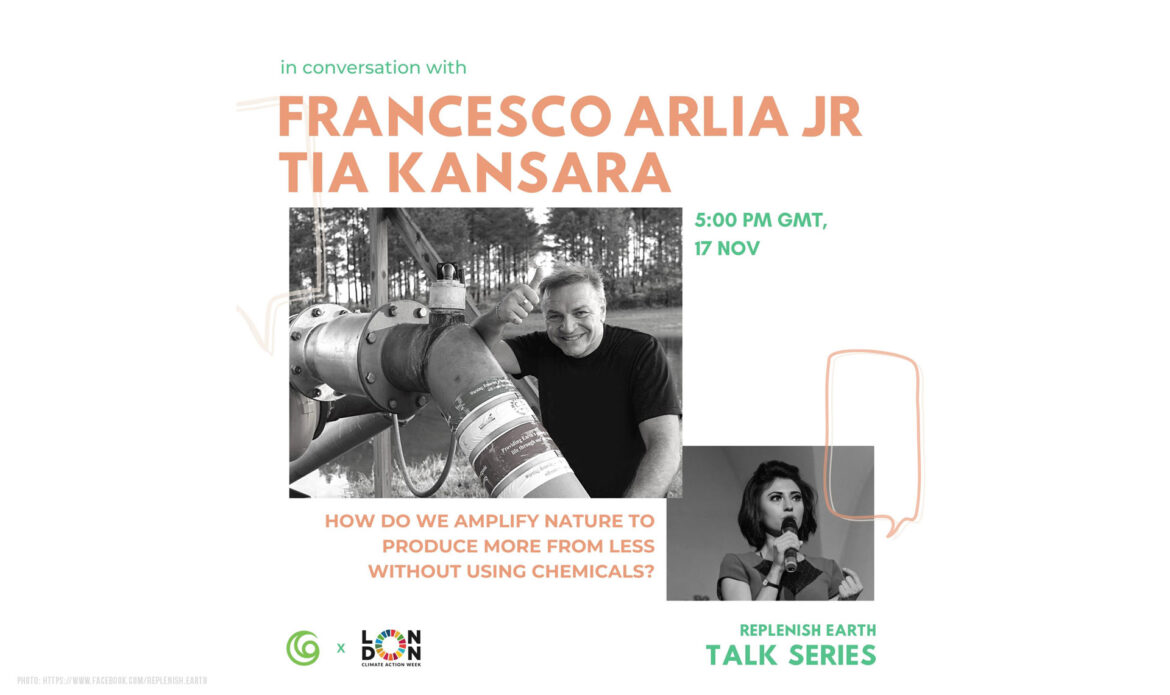
Replenish Earth and the Environmental RE Talk Series
Replenish Earth and the environmental RE Talk Series event that reunited the top thinkers in the world Harvest Harmonics…
1

Organic Agriculture: An Impossible Need
Among the most significant demands and mandates that are being received by research institutions, technology transfer centers, municipal organizations, non-governmental organizations and international cooperation agencies, is the development and transfer of appropriate technology. for food production in cities or their peripheries. Within this context, the generation and application of appropriate and sustainable technologies acquires, in light of the current challenges of mega-urbanization, urban poverty, malnutrition and food insecurity, a critical and urgent importance.
Urban and peri-urban agriculture (UPA) must be conceptualized as an integral and coexisting part of the complex mechanism of food supply and distribution in urban centers, requiring mechanisms for the adoption and implementation of intensive horticultural production processes aimed at self-consumption and / or market.
From the perspective of FAO, organic agriculture comprises a holistic production management system that promotes and improves the health of the agro-ecosystem and in particular biodiversity, biological cycles and soil biological activity requiring technologies, based in verified technical scientific information that allows appropriation and expansion.
Organic agriculture, seen as a coexisting component with other forms of agriculture at the urban and peri-urban level, is beginning to attract the attention of many countries, especially in the face of the reduction of government support for credits to agricultural inputs and technology transfer. For this to be promoted and concrete, it is necessary to propose a diversification approach in organic systems, in turn increasing the stability of ecosystems, protecting the environment, the safety of human health, and adapting to the socioeconomic conditions that they prevail in marginalized sectors of large urban and peri-urban areas. This process must be based on proven technical guidelines in a process of coexistence with guidelines that come from sustainable agriculture, soil conservation agriculture, integrated crop and pest management, and biotechnology applications, especially in the control of abiotic limitations. and biotics that are influencing the productivity and safety of the products.
Sustainable organic agriculture poses new challenges to countries and their institutions especially in the possibility of contributing to the quality of the environment, income generation and food security. An informed, science and technology-based decision regarding organic agriculture must be integrated into a range of sustainable agricultural and horticultural options supported by research and extension to support business opportunities at national and international levels.
Organic agriculture offers the opportunity to combine traditional knowledge with modern biological, genetic and molecular science, new and innovative production technologies to provide business opportunities that allow income generation and a greater contribution to self-supply of food.
It is a priority activity to strengthen and disseminate appropriate technologies for organic agriculture at the level of urban and peri-urban conditions. The manual focuses with criteria of solid scientific bases, vital aspects of fertility and soil management, biological and natural control of pests and diseases, genetic improvement and seed production, and aspects of
horticultural, fruit and animal management and their commercialization, for normal conditions of the countries of the region. The proposal considers conducting an exhaustive review of national and international literature incorporating previously unpublished information within a broad context of sustainable organic agriculture not subject to dogmatic limitations in its technical applications and open to coexistence with other forms of sustainable agriculture.
The manual is an integral part of a technology transfer process aimed at urban and peri-urban agriculture that is being developed by the FAO Regional Office for Latin America and the Caribbean, which includes production options linked to conventional orchards with minimal application of supplies; hydroponic micro gardens; organic gardens and home gardens, as well as the raising of small animals in regulated conditions with respect to health and current municipal regulations.
Aware that the organic production methods to be chosen by urban and peri-urban farmers depend on agroecological conditions and the availability and cost of the basic input of organic matter, it is very important to analyze the bases for a sustainable production at the level. from organic orchards. This vision should include the use of local varieties and improved varieties by governmental and academic research institutes including the future feasibility of incorporating improved varieties through the application of modern biotechnology in aspects such as resistance to insects, fungi, bacteria and other biotic and abiotic agents as well as the improvement of their nutritional quality.
Urban and peri-urban organic agriculture should not be limited by commercial or fundamentalist conceptualizations, promoting in turn the application, based on published and verified scientific information, of comprehensive multicultural management comprising crop rotations, cover crops, fertilizers from natural sources, the use of composted organic materials and zero-tillage technologies to improve soil fertility and structure. In the aspects of control of insects and other pests, the focus should be placed on the use of biopesticides, plant extracts and the use of varieties improved by resistance through the application of biotechnology to genetic improvement. Organic agriculture for urban conditions must allow a harmonious coexistence of technologies, primarily seeking the self-supply of safe food to the many marginalized urban and peri-urban populations and promote the eventuality of income generation through self-management. This approach is both a challenge and a revolutionary idea.
Press Room
Agricultural Technology for Farmers in India
Harvest HarmonicsTM New Biophysics Agricultural Technology For Farmers In India The Agricultural Biophysics technology, 20…
1
Organic Earth Tech, OETI, Launches One Million Dollar Technology
After hurricanes Maria and Irma, Puertorrican farmers are yet to receive the needed aid to recover. Organic Earth Tech…
0
Produce More From Less
CEO Harvest Harmonics Frank Arlia speaking at Replenish. Earth interview by Tia Kansara – London Climate Action Week. How…
0
Replenish Earth and the Environmental RE Talk Series
Replenish Earth and the environmental RE Talk Series event that reunited the top thinkers in the world Harvest Harmonics…
1
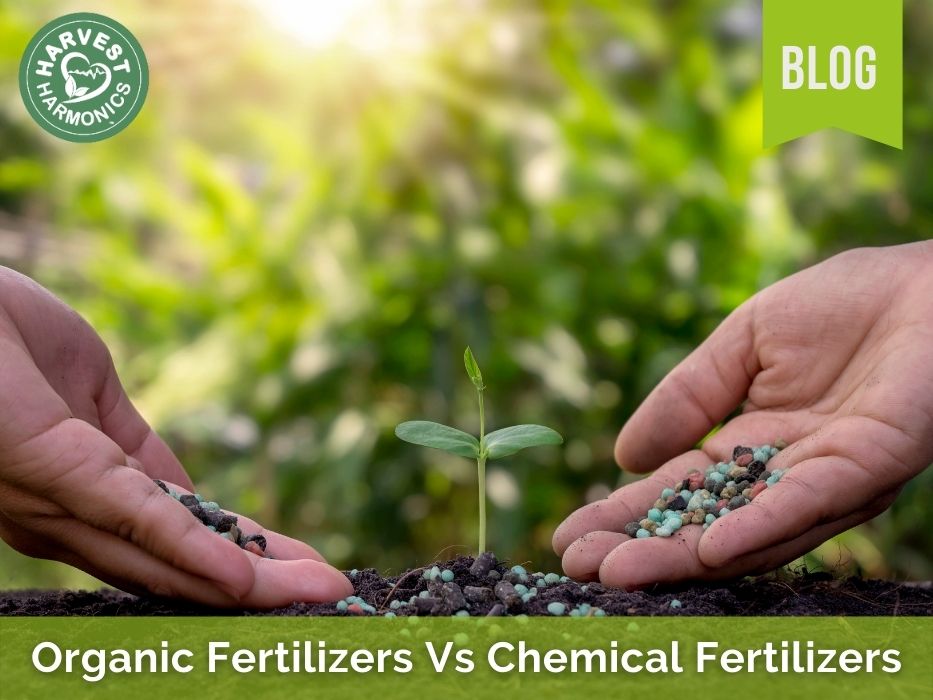
Organic Fertilizers Vs Chemical Fertilizers
Plants and crops need nutrients for their proper development and optimal crop performance. These nutrients are taken from the air through the leaves (CO2 and O2) and, mainly, from the soil through the roots (macronutrients: N, P, K, Ca, Mg, S and micronutrients: Fe, Mn, Zn, Cu, B…). For a soil or substrate to have and provide all the nutrients that the plant needs, it is necessary to fertilize the soil using fertilizers, either organic, chemical or a combination of both.
Which is better: organic compost or chemical compost?
Although on many occasions confrontational situations are created between some types and others, the truth is that the use of chemical fertilizers, organic fertilizers or the combined application of both will depend on the needs of the plant, the specific characteristics of the soil or substrate, the extension and type of crop production, and point of development (before sowing, during development, etc.).
Differences and advantages of organic fertilizers and chemical fertilizers
Organic fertilizers are by-products of animal and vegetable origin: manure (excrement of cows, pigs, chickens, etc., from livestock operations); composting of organic matter from various sources: post-harvest plant remains, organic matter for human consumption; sludge (from treatment plants); peat; minerals; etc.
Although organic fertilizers contain an important combination of nutrients, their content or, rather, their concentration in micronutrients and macronutrients is usually low and variable, which is why they must be supplied in high concentrations to cover the fertilization needs of the soil. But, on the other hand, organic fertilizers provide great benefits and improvements to the quality and conditions of the soil since:
1. They improve the structure and properties of the soil.
2. It has a regulating effect on soil temperature and prevents excessive evaporation by helping to maintain soil moisture.
3. It favors the development of beneficial microbiota for the crop.
4. Creates suitable conditions for the use of chemical fertilizers of specific nutrient composition.
On the other hand, chemical fertilizers or chemical fertilizers have a synthetic origin and are produced by the agrochemical industry from natural substances or by chemical synthesis. Chemical fertilizers have some clear advantages:
1. They have a defined chemical composition, so they can be applied more precisely as needed.
2. They can be applied more easily and at specific times in the development of the crop.
3. They allow more variety of applications (particles scattered on the ground, dissolved in water, application in specific parts).
But chemical fertilizers also have limitations, since they only affect the presence of nutrients in the soil, without really improving its physical characteristics. That said, as it contains nutrients in high concentration, its application in excess can cause important problems of environmental pollution, especially nitrogen fertilizers and the contamination of groundwater.
Chemical fertilizers and organic fertilizers can be two complementary ways to fertilize soils. Depending on the characteristics of the crop and the type of production (it is not the same to speak of a small garden than a large farm) we can preferably use organic fertilizers, chemical fertilizers or a combination of both.
Press Room
Agricultural Technology for Farmers in India
Harvest HarmonicsTM New Biophysics Agricultural Technology For Farmers In India The Agricultural Biophysics technology, 20…
1
Organic Earth Tech, OETI, Launches One Million Dollar Technology
After hurricanes Maria and Irma, Puertorrican farmers are yet to receive the needed aid to recover. Organic Earth Tech…
0
Produce More From Less
CEO Harvest Harmonics Frank Arlia speaking at Replenish. Earth interview by Tia Kansara – London Climate Action Week. How…
0
Replenish Earth and the Environmental RE Talk Series
Replenish Earth and the environmental RE Talk Series event that reunited the top thinkers in the world Harvest Harmonics…
1

Agricultural Applications of Efficient Microorganisms
For the action of microorganisms to be efficient, environmental requirements must be known, including humidity, temperature and pH. There is a greater diversity of microorganisms in environments with a neutral pH between values of 6 to 8 and with temperatures between 15-45°C (50-113°F). The reproduction or inoculation of ME is carried out under anaerobic fermentation.
Several authors have proposed the implementation of clean technologies through the use of microorganisms with beneficial effects.
The use of efficient microorganisms in agriculture depends on the area, soil quality, climate, cultivation methods and irrigation, among other factors. With the application of beneficial microorganisms, the soil retains more water, which implies an improvement of the crops that increase their resistance to water stress in times of drought or in sandier soils. This improvement is given both by the increase in organic matter in the soil, reducing porosity, as a consequence of microbial activity, and by ionic balance, thus favoring the interaction of the surface charges of the physical structure of the soil with ionic charges. of water (Toalombo, 2012).
Use in seedbeds: there is an increase in the speed and percentage of seed germination, due to its hormonal effect, similar to that of gibberellic acid, increased vigor and growth of the stem and roots, from germination to the emergence of seedlings, for their effect as plant growth promoting rhizobacteria. Increased chances of seedling survival.
Use in plants: they induce mechanisms of elimination of insects and diseases in plants, since they can induce the systemic resistance of crops to diseases, consume the exudates of roots, leaves, flowers and fruits, avoiding the spread of pathogenic organisms and development of diseases, increases the growth, quality and productivity of crops, and promotes flowering, fruiting and maturation due to its hormonal effects in meristematic areas. It increases the photosynthesis capacity through greater foliar development (Haney et al., 2015).
Press Room
Agricultural Technology for Farmers in India
Harvest HarmonicsTM New Biophysics Agricultural Technology For Farmers In India The Agricultural Biophysics technology, 20…
1
Organic Earth Tech, OETI, Launches One Million Dollar Technology
After hurricanes Maria and Irma, Puertorrican farmers are yet to receive the needed aid to recover. Organic Earth Tech…
0
Produce More From Less
CEO Harvest Harmonics Frank Arlia speaking at Replenish. Earth interview by Tia Kansara – London Climate Action Week. How…
0
Replenish Earth and the Environmental RE Talk Series
Replenish Earth and the environmental RE Talk Series event that reunited the top thinkers in the world Harvest Harmonics…
1

Pesticide Poisoning of Humans
The estimates of poisonings and deaths made by the World Health Organization (WHO) and the United Nations over three decades dramatically reflect the growing tragedy that, for millions of people, particularly in southern countries, has signified the agricultural production model known as the green revolution. This crisis is deepening under the so-called new green revolution, based on pesticide-resistant transgenic seeds, such as Monsanto’s Roundup Ready (RR) varieties resistant to glyphosate; or toxin producers such as Bt varieties (they produce the Bacillus thuringiensis toxin), which pose environmental and health risks and increase the use of pesticides. The United States Environmental Protection Agency (EPA) declared Bt varieties as pesticides, therefore, they require the same rigor in the evaluation of toxicity and environmental impacts.
In 1972, the WHO estimated that half a million poisonings occurred in the world caused by pesticides each year, with more than 5,000 deaths (approximately 1% mortality), suggesting that developing countries suffered half of these poisonings and three-quarters of deaths. In the following decade, the WHO estimated more than three million poisonings with a probable mortality of 1%, while the United Nations considered that the rate of poisoning in southern countries could be 13 times higher than in industrialized countries, for which declared pesticides as one of the biggest problems in the world. By 1991 it was estimated that 25 million agricultural workers would suffer an episode of pesticide poisoning and that these would be responsible for 437,000 cases of cancer and 400,000 involuntary deaths. Additionally, the latest estimates indicate that 99% of poisonings and deaths occur in developing nations.
It is very difficult to calculate poisonings in Colombia and Latin America because most cases are not registered. For example, in Central America, where during 1999-2001 there were 400,000 intoxicated persons per year, the underreporting was estimated at about 98%. But while the thousands of people poisoned or killed in the countryside may go unnoticed, major accidents during transport or in factories and human tragedies due to mass poisoning are proof that these powerful poisons are there, licensed by governments and threatening permanently to rural and urban inhabitants. As an example, in addition to the Bhopal tragedy, the following may be mentioned:
· More than 35 years ago, on November 25, 1967, dozens of children were poisoned and died in Chiquinquirá, Colombia, when they ate bread made with wheat flour contaminated with Folidol (paration) for breakfast.
· Deaths caused by Syngenta’s paraquat herbicide (Gramoxone, Gramuron, Agroquat, Gramafin, Actinic, Calliquat) in the world are estimated in the thousands.
· In Costa Rica, since 1980 and for two decades, it has been reported as the leading cause of poisonings and responsible for a third of the deaths of hundreds of agricultural workers.
Those guilty for the millions of intoxicated and the thousands of deaths must be pointed out, and the debt accumulated by such great suffering must be paid.
In Colombia, 1,370 commercial pesticides formulated based on 400 active ingredients have a sales license. Of these, 28 active ingredients (123 commercial formulations) belong to WHO categories Ia and Ib and are among the most widely used pesticides in Colombia and Latin America. There is a call for the prohibition and non-use of these pesticides.
By Arantza Castro
Press Room
Agricultural Technology for Farmers in India
Harvest HarmonicsTM New Biophysics Agricultural Technology For Farmers In India The Agricultural Biophysics technology, 20…
1
Organic Earth Tech, OETI, Launches One Million Dollar Technology
After hurricanes Maria and Irma, Puertorrican farmers are yet to receive the needed aid to recover. Organic Earth Tech…
0
Produce More From Less
CEO Harvest Harmonics Frank Arlia speaking at Replenish. Earth interview by Tia Kansara – London Climate Action Week. How…
0
Replenish Earth and the Environmental RE Talk Series
Replenish Earth and the environmental RE Talk Series event that reunited the top thinkers in the world Harvest Harmonics…
1