Sound Waves Effects on Tomato Fruit Quality
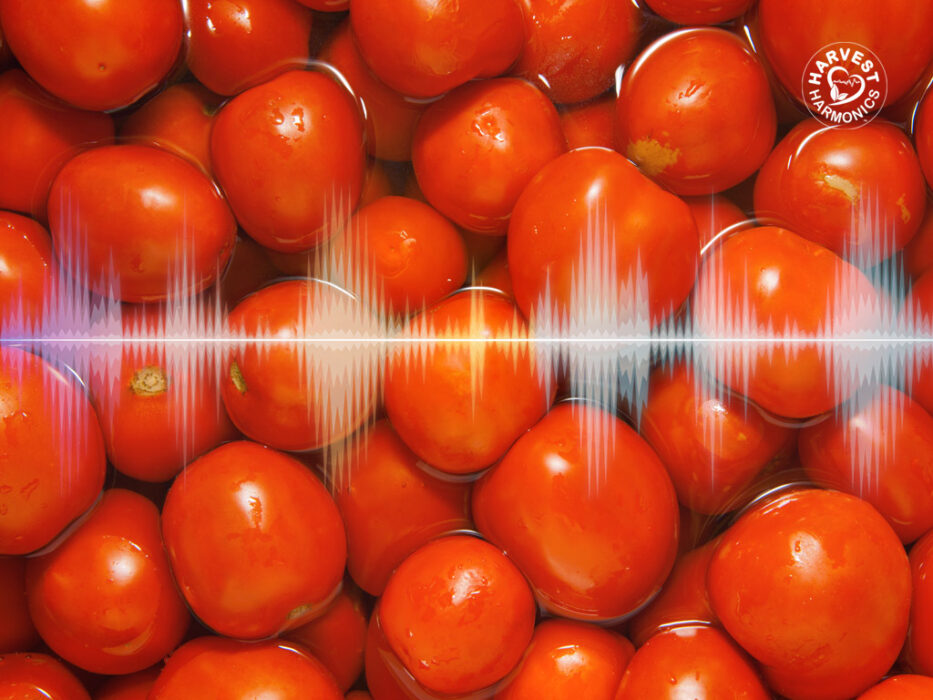
Sound Waves Effects on Tomato Fruit Quality
Tomatoes are one of the most produced and consumed fruit worldwide, it is considered an important source of phenolic and flavonoid antioxidant compounds, vitamin C, vitamin E, lycopene, carotene, and lutein contents critical for human health due to their effects on cancer and aging.
The United States produces around 1.4 million metric tons of tomatoes for fresh market consumption; California is the most important supplier of tomatoes in the United States followed by Florida and Indiana. The 2021 California crop yield is expected to be about 10.659 million metric tons, and the rest of the United States adding 453,000 metric tons for 11,112 million metric tons of total production. Per capita tomato consumption in the United States was stable and the average American can consume more than 17 kilograms of fresh tomatoes annually. This panorama shows the importance of tomato consumption in the diet of Americans, for which the increase in the quality of the crops, the production, and nutritional conditions of the crop are an important source of elements that strengthen health. Additionally, a healthier and better tasting tomato will be much more desired by consumers and increase the value perceived by the producer and public.
Plants respond to environmental stimuli such as light, heat, gravity, and contact; these abiotic factors played an important role in biological stimulation and can function as stress signals that are transmitted to cells where they activate various stress response mechanisms. Mechanisms by which plants recognize external signals and then alter the expression of genes to affect physiological and/or metabolic processes are still under research, however, many pathways are now known. Some external factors like magnetic fields, mechanical stimulus, and sound waves have effects on living systems, cell metabolism, gene expression, seed germination, and many others.
Studies developed by Collins & Foreman (2001), Creath & Schwartz (2004), Telewski (2006), Gagliano & Renton (2013), were conducted using sound waves through different plant physiological stages like seed germination, photosynthesis mechanism, and gene transcription, proving that various sound wave energy spreads in the form of a pressure wave. When these sound waves or ultrasound waves are applied to a plant, the effects of these wave signals increase biological processes as the frequency increases and had scientifically tested effects on growth and yield in different species of fruits and vegetables used for human consumption (Telewski, 2006 and Gagliano & Renton, 2013).
Due to better conditions of crops that do not use pesticides to protect natural resources, the accumulation of elements, and phytochemicals, recent studies have shown increased effects of sound and electromagnetic waves on the physiological activities of plants and their implication in the development of more productive crops. In this article, we show how two different studies demonstrate results with the influence that sound waves have on the production and quality of tomato fruits, and how they allow delaying the tomato fruit ripening and help extend fruit shelf life. The effect of sound waves also evidenced the increased content of soluble solids and beneficial compounds for human health in the tomato fruits.
The first research study case was developed at the Research Fields of Cukurova University, Turkey. 10-week-old tomato plants were used in the experiments, a randomized complete block empirical design with three replicates, 10 plants in each. The tomato plants in each chamber were exposed to sound stress with sound waves at 90 decibels and 600 Hertz in the first week, 1240 Hertz in the second week, and 1600 Hertz in the third week; thus, sound stress was applied to the plants in a gradually increasing manner, and the fruits collected after the third treatment period had been subjected to previous treatments of 600 Hertz and 1240 Hertz and final treatment of 1600 Hertz (Altunas & Ozkurt, 2019).
Results show that as the sound frequency increased so did the Total Soluble Solids (TSS), phenol, ascorbic acid, and lycopene content levels were higher at 600 Hertz compared with the control group plants. This rate corresponds to an increase of 20%. The lycopene content showed similar results to ascorbic acid; as sound frequency increased, so did the lycopene content in the plants; this increase was at a rate of 14% at the highest frequency of 1600 Hertz compared with that in the control plants (fig 1); (Altunas & Ozkurt, 2019).

Figure 1. Effect of different sound wave frequencies on Total Soluble Solids (TSS), Total Phenolic Content (TPC), ascorbic acid, and lycopene content of tomato fruits. Values in each graph with different lower-case letters are significantly different at p\0.05. Adapted from: Altunas & Ozkurt 2019.
Another field research developed at the Department of Agricultural and Biotechnology, National Academy of Agricultural Science in South Korea, designed with tomato fruits that were sampled at the mature green stage of development (average fruit weight 172.9 g) and exposed the same day of harvest to a 1 kHz sound wave for 6 hours, then fruits were placed in storage room at 73.4 °F and monitored for quality changes after sound wave treatments. After 14 days of storage, tomato fruit treated with sound waves of 1 kHz exhibited delayed ripening as compared with the nontreated fruit at 5 or 7 days after treatment. Laboratory analysis show that ethylene production were lower in tomatoes treated with sound waves of 1 kHz than in the non-treated control, and indicate that the imposition of the sound treatment wave significantly effects the biological process of ethylene, resulting in the delay of the fruit ripening.

Figure 2. Phenotypic analysis of tomato fruit ripening after sound wave treatment. Adapted from: Kim et.al., 2015.
Researchers succeeded in proving that the expression level of E4 and E8 genes in tomato plants (ethylene-inducible genes) were also significantly reduced by the sound wave treatment probably due to the low concentrations of ethylene in sound-treated tomato fruit. These results well agreed with the previous report on the strict dependence of those target genes with ethylene during fruit ripening (Kesanakurti et al., 2012; Lincoln & Fischer, 1988).
Finally, the experiments here analyzed enhance our background support over Agri-Wave technology developments and increases scientific support on effects of sound wave stress in tomato fruit development promoted metabolite accumulation, which resulted in an improvement in fruit quality, texture, and nutritional characteristics and will increase the value of tomatoes in the consumer market. In comparison, acoustic biology can have viable applications in agriculture and may help to increase product post-harvest durability and reduce losses for producers and sellers by extending the ripening of tomato fruit.
In this same way, the Kyminasi Plant Booster, an Agricultural Radio Wave based technology system, installed in a tomato crop in the Cauca Valley, Colombia (January 2020) positively influenced the development of tomato fruits, increasing production, advancing the harvest time, and reducing the requirement of pesticides.

Figure 3. Phenotypic characteristics of tomato fruit after sound wave treatment in Cauca Valley, Colombia.
Another successful case was identified between March and May of 2017, technology system was installed on a farm in Washington, United States; conducted by a controlled study to demonstrate changes in soil nutrient absorption under the effect of Kyminasi Plant Booster. The soil analysis results show a difference in the Cation Exchange Capacity from 13.3 meq/100g in the control field to 21.9 meq/100g in soil under Kyminasi treatment with an increase in the cation exchange in elements such as phosphorus, potassium, magnesium, and calcium.


Figure 4. Differences in soil CEC and key elements under effect of Kyminasi Technology (A) and Control (B) on tomato field.
Kyminasi Plant Booster Technology improves soil conditions by contributing to the recirculation of nutrients. The efficient use of water and the reduction in the use of chemical products for pest control, while improving the phytosanitary conditions of the crops and generating organic production proves beneficial health of the end consumer with better production and profits for farmers.
By Leonardo Martinez, Harvest Harmonics Field Researcher South America.
LinkedIn: Leonardo Martinez Luque
Twitter: @leonemil
References
https://www.worldatlas.com/articles/the-top-10-tomato-producing-states-in-the-united-states.html
https://www.growingproduce.com/vegetables/tomatoes/u-s-fresh-market-tomato-production-levels-are-falling-infographic/
https://www.growingproduce.com/vegetables/consumption-is-up-production-is-down-understand-how-fresh-tomato-trends-affect-you/
https://vegetableswest.com/2021/02/12/ca-utilized-vegetable-production-value-shows-slight-decline/
https://www.nass.usda.gov/index.php
http://www.tomatonews.com/en/us-processing-industry-facts-and-comments-on-the-coming-2021-season_2_1300.html
https://www.freshplaza.com/article/9282539/year-2021-brings-new-challenges-to-the-tomato-and-vegetable-market/
Press Distribution
Contact Info:
Name: Jim Kurtz
Email: Send Email
Organization: Harvest Harmonics
Address: 611 Druid Rd Suite 201, Clearwater, Florida 33756, United States.
Phone: +1 (844) 476 – 7873
Website: www.harvestharmonics.com