

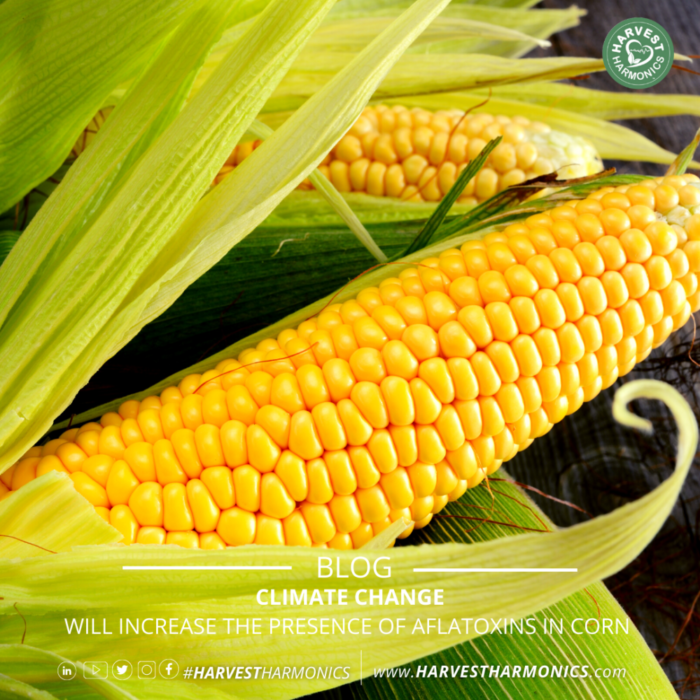
Climate Change Will Increase the Presence of Aflatoxins in Corn
A study carried out in the United States projects risky levels of this type of toxin for the period between 2031 and 2040 (Niklas, 2022).
Changes in the climate will abandon the global food production market: This is reflected in a recent investigation carried out by the Michigan State University (MSU). The document will warn about the increase in the levels of aflatoxins present in North American corn due to climate change. This is mainly explained by the alterations that food can suffer from climate variations, which, according to the document, will increase the loss of fungi that produce this type of toxin in corn (Niklas, 2022).
The study modeled the impact of rising temperatures and advancing dry weather conditions that have been projected in certain regions of the United States for decades to come. And it is that the characteristics of that type encourage the spore of aflatoxin-producing fungi to become airborne, which increases their chances of contaminating crops (Niklas, 2022).
The fungi Aspergillus flavus and Aspergillus parasiticus are producers of aflatoxin, a microtoxin that can infect peanuts, walnuts and corn, not only degrading the quality of crops, but also causing health problems for humans and animals (Niklas, 2022).
The study projected an increase in the risk of the presence of aflatoxins between the years 2031-2040 due to the increase in temperature that North American corn-producing regions may experience during those years. Thus, the investigation indicated that, for that period of time, 89.5% of the counties belonging to corn-producing states will be exposed to a greater amount of aflatoxins. Specifically, 5.3% of those counties are expected to experience a 1% increased risk of increased susceptibility to these types of toxins (Niklas, 2022).
Although cases associated with the presence of aflatoxins in corn fields are currently limited to the southern states of North America, changes in the climate of that country could push the problem to the Corn Belt. According to the study, Niklas (2022) mentioned that this could cause “alterations in the national and world corn markets, increasing the expected economic impact.”
Thus, it is expected that in the future the production of corn crops may be displaced to more extreme regions of the north or south of the country, where the climate is cooler and more humid, which could reduce the risks of aflatoxins in crops. However, this could affect the culture of exploitation that has been developed over generations in states with traditional corn production (Niklas, 2022).
Finally, Niklas (2022) stated that the document highlights the need for a plan to mitigate the risk that the increase in aflatoxins in North American corn can bring. In addition, the use of irrigation is emphasized as a strategy to reduce the risk of aflatoxins, since this technique reduces the stress related to the effects produced by water scarcity in corn, such as fungal infections. In addition, researchers are already using conventional and biotechnological farming techniques to develop crops that are more resistant to drought, insect damage, and the aforementioned fungal infections.
An excellent biotechnological option is the Kyminasi Plant Crop Booster system, which is a technology that applies biophysics to crops and allows calibrating or fine-tuning the signals of plant cells to obtain a better performance and improve photosynthesis as well as the soil system and its beneficial microorganisms.
The Kyminasi Plant Crop Booster technology would benefit all those vegetable, fruit and flower growers to realize an environmentally friendly, sustainable agriculture because it could reduce the use of fertilizers and optimize the use of irrigation water.
If you would like to know more about our technology, contact us on our website www.harvestharmonics.com
Source:
Niklas, R. (May 9, 2022) Cambio climático aumentará la presencia de aflatoxinas en maíz Red Agrícola. https://www.redagricola.com/cl/cambio-climatico-aumentara-la-presencia-de-aflatoxinas-en-maiz/#:~:text=El%20estudio%20proyect%C3%B3%20un%20aumento,ma%C3%ADz%20norteamericano%20durante%20esos%20a%C3%B1os.
Edit by: Mariangel Rodríguez
Press Room

Agricultural Technology for Farmers in India
Harvest HarmonicsTM New Biophysics Agricultural Technology For Farmers In India The Agricultural Biophysics technology, 20…
1

Organic Earth Tech, OETI, Launches One Million Dollar Technology
After hurricanes Maria and Irma, Puertorrican farmers are yet to receive the needed aid to recover. Organic Earth Tech…
0

Produce More From Less
CEO Harvest Harmonics Frank Arlia speaking at Replenish. Earth interview by Tia Kansara – London Climate Action Week. How…
0

Replenish Earth and the Environmental RE Talk Series
Replenish Earth and the environmental RE Talk Series event that reunited the top thinkers in the world Harvest Harmonics…
1
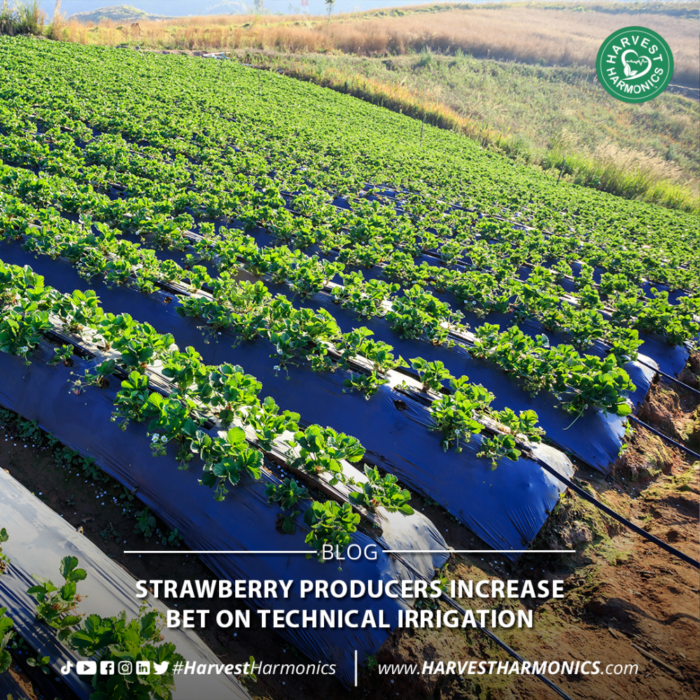
Strawberry Producers Increase Bet on Technical Irrigation
With their sights set on the next fruit campaign, companies are installing mulch and irrigation tape, which means a greater installed area regarding past years and better production yields.
As the Peruvian strawberry production grows, concerns about its environmental impact increases. Something that is evident given this crop’s dynamism, especially in Lima’s small north valleys, where this campaign will produce around 2.200 hectares (5.436 acres), while at national level are between 3.500 to 3.800 hectares (8.648 to 9.390 acres) already installed. In this area is where 80% of the national market strawberries are cultivated, as well as the frozen ones for the main markets as USA, Canada, Korea, Japan and Europe.
Nonetheless, berries’ advisor José Cordero points out that this is an intense crop whose production requires a large amount of resources (water, energy, fertilizers, plastic, etc.) and that it generates a big environmental impact. One of the main impacts is in hydric resources, given that most of the farms take water from the High Andean basins that supply to rivers all year round. “For this reason, the work of the user commissions of the hydraulic subsector that includes the Huaral, Huaura and Barranca valleys is essential”, he recommends.
At the same time, this is a fairly “sensitive” crop, so it is appropriate to adopt the most innovative agronomical practices. Along these lines, current cultivation techniques allow strawberries to grow successfully under certain different climate conditions, open-field plants, in a protected or soilless environment. “Despite this wide adaptability, only perfect irrigation management will guarantee excellent results, both in terms of quantity and in quality”, indicates the expert and points out that the adoption of a drip irrigation system and waterings’ correct planning are key to achieve good aesthetic and organoleptic quality and, at the same time, a high production.
Campaign with increased planting under irrigation tapes
It should be noted that in Peru for years it is cultivated under two types of cultivation and irrigation systems with different results. “In the first one, the ground level crop with gravity irrigation has average yields of 35 tons in the valley. And the second one, that is under ridges systems with mulch (plastic coverage at ground level) and irrigation tapes, is yielding an average of 45 tons in the valley”, Cordero underlines.
In view of this, he notes that this 2022 strawberry campaign a lot of mulch and irrigation tapes have been installed, showing a larger installment area than previous years. “We can clearly see a greater interest in support from some companies to motivate this type of planting; just in Huaral, Huaura and Barranca valleys there will be installed approximately 450 hectares (1.112 acres), only from small producers of 2-5 hectares (5-12 acres)”, he points out.
Regarding the production cost per hectare, he expresses that an increase has occurred, so today to install a hectare which consists of renting land, preparation, mulch, tapes, labor for planting and crops borders on 18.000 dollars. “And 27.000 dollars approximately the entire campaign, including fertilizer inputs, sanitation, and maintenance and harvesting labor”, he details.
However, he considers that with these costs it is urgent that the companies bet on designing programs for crop importations of new varieties that guarantee a higher production of kilos per plant and optimum varieties for the Peruvian valley.
As general manager of Agro Natural Park, he points out that advisories with programmed visits have started at a national level to train producers in management. “Currently, Chimbote (north coast) is developing strawberries with technical irrigation in the Pampa La Carbonera, in this area, our company installed the first strawberry in 2010, strawberries by gravity and technical irrigations and today there are around 80 hectares”, he remembers.
Likewise, he highlights that a little further north, in Piura, they started a strawberry project with the Ecosac company to evaluate the adaptability and behavior with which they have had very good results.
Overview of Exports
Regarding exports for this 2022, the specialist asserts that the demand for orders abroad is expected, despite the offers that other producing countries will propose, “but the price that will be handled this year is still uncertain, added to freight increases and others”. According to the consulting firm Agrodata, in 2021, strawberry shipments
increased by 37%, reaching US$61 million at an average price of US$2.01 per kilo, closing in December with 30.5 million of kilos, projecting for this year to reach 38 million kilos exported. If you would like to know more about our technology, contact us on our website www.harvestharmonics.com
Source: REDAGRICOLA
Press Room
Agricultural Technology for Farmers in India
Harvest HarmonicsTM New Biophysics Agricultural Technology For Farmers In India The Agricultural Biophysics technology, 20…
1
Organic Earth Tech, OETI, Launches One Million Dollar Technology
After hurricanes Maria and Irma, Puertorrican farmers are yet to receive the needed aid to recover. Organic Earth Tech…
0
Produce More From Less
CEO Harvest Harmonics Frank Arlia speaking at Replenish. Earth interview by Tia Kansara – London Climate Action Week. How…
0
Replenish Earth and the Environmental RE Talk Series
Replenish Earth and the environmental RE Talk Series event that reunited the top thinkers in the world Harvest Harmonics…
1
7 Organic Nitrogen Sources – Alternatives to Urea
The fertilizer crisis is a fact, especially nitrogenous fertilizers, particularly Urea, which is one of the most widely used chemical fertilizers worldwide. This product provides 46% Nitrogen, which is why it is widely used for most crops. However, with its imminent shortage and high prices, farmers are forced to look for alternatives, and the current trend is to look for organic sources of nitrogen, which we list below.
- Vegetable products. This group includes several products such as alfalfa flour (4% N), cottonseed flour (6% N), corn gluten (9% N) and soy flour (7% N), are examples of products vegetables that are sometimes used as organic sources of nitrogen in organic agriculture. These materials require bacterial mineralization to make nitrogen available, which is generally rapid.
- Blood meal. Derived from cattle slaughter residues. Powdered dried blood contains 12% nitrogen, rapidly mineralizing to forms readily available to the plant. This product is completely soluble in water and suitable for distribution through the irrigation system. It projects to be one of the main organic sources of nitrogen.
- Guano. Guano (8 to 12% N) is obtained from deposits of excrement and remains of seabirds on extremely arid coasts. Guano was an important source of nitrogen until before the industrial processes for the manufacture of fertilizers were developed. Currently many deposits have been depleted. Guano is also collected from caves where large populations of bats are found. This material can be applied in either solid or liquid form.
- Feather meal. This input contains 14 to 16% nitrogen. Feathers contain about 70-90% protein and much of the feathers are in the form of non-soluble keratin, requiring processing with pressurized steam and animal enzymes. Therefore, feather nitrogen is initially unavailable, but is rapidly mineralized under favorable conditions. Feather meal pellets make it easy to apply and handle. Feathers that are not processed have a slower nitrogen release and may be a good option if you can overcome the difficulty of applying evenly.
- Fish meal and fish emulsions. Inedible fish are used, which are cooked and pressed to separate the solid fraction from the liquid. The solid fraction is used as fishmeal (10 to 14% N) for fertilizers or cattle feed. From the liquid fraction the oil is separated and from what remains a fish emulsion is made, which contains 2 to 5% nitrogen. Its mineralization is usually rapid, since at normal summer temperatures more than half of the organic nitrogen is mineralized within the first 2 weeks after its application.
- Seaweed. They are products derived from marine algae such as those of the Ascophyllum genus . Dried seaweed is about 1% nitrogen and 2% potassium. In addition, they usually have small amounts of other useful nutrients for plants. Due to their low nutrient content, these products are generally used on high-value crops for reasons other than nutrition.
- Sodium nitrate. This fertilizer can be used in organic agriculture, with the restriction of only using it during the most critical stages of nitrogen demand in crops and not to satisfy the total demand. In the US its use is limited to no more than 20% of the crop’s nitrogen requirement and even other countries restrict its use. This highly soluble fertilizer contains 16% nitrogen.
If you would like to know more about our technology, contact us on our website www.harvestharmonics.com
Press Room
Agricultural Technology for Farmers in India
Harvest HarmonicsTM New Biophysics Agricultural Technology For Farmers In India The Agricultural Biophysics technology, 20…
1
Organic Earth Tech, OETI, Launches One Million Dollar Technology
After hurricanes Maria and Irma, Puertorrican farmers are yet to receive the needed aid to recover. Organic Earth Tech…
0
Produce More From Less
CEO Harvest Harmonics Frank Arlia speaking at Replenish. Earth interview by Tia Kansara – London Climate Action Week. How…
0
Replenish Earth and the Environmental RE Talk Series
Replenish Earth and the environmental RE Talk Series event that reunited the top thinkers in the world Harvest Harmonics…
1
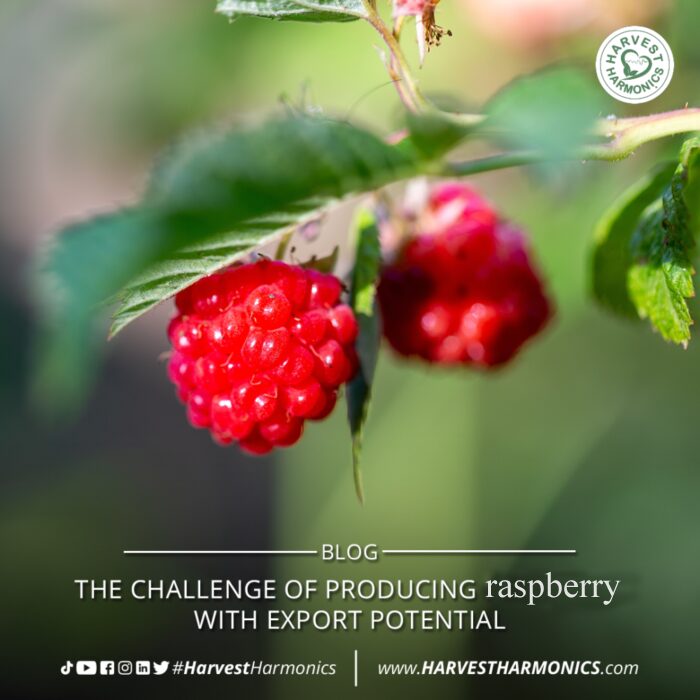
The Challenge of Producing Raspberries with Export Potential
Berry exports are still meager and their crops barely reach 100 hectares throughout the country. However, there is a great opportunity for growth in the US market.
It is just the first steps. To date, Peruvian raspberries have only been exported in small samples to different countries, for amounts not exceeding US$5,000. However, this situation could change if the product enters the United States, the main partner of Peru’s agro-export sector. According to the Foreign Trade Society of Peru (Comex Peru), work is currently being done on the subject, with the aim of encouraging growth in the production of the fruit.
According to the international adviser on berry cultivation , José Cordero, the Peruvian raspberry could follow a route similar to that of blueberries, the flagship product of the country’s agro-export basket. “In addition, the entry of the Peruvian raspberry into the United States would cause the interest in investing in this crop by Peruvian agro-industrialists to increase exponentially,” he says.
If they were to enter that market, Peruvian agro-exporters would have Mexico as their main competitor, which accounts for 99% of US raspberry purchases. In 2019, the US imported raspberries from Mexico for a total of US$1.36 billion, an increase of 20% compared to the previous year. “This increase has been constant since 2017 and it is estimated that it would continue in this line, an aspect that would be very beneficial for Peruvian raspberries and, in general, for the national agro-export basket,” highlights the advisor.
It should be noted that the main destinations for Peruvian raspberries in 2019 were Europe (70% of the total volume exported), Panama (19%) and Canada (11%). Regarding its prices, Spain registered the highest with US$ 6.89 per kilo. The UK ($5.43) and the Netherlands ($4.33) followed.
PRODUCTION IN NORTE CHICO AND SIERRA CENTRAL
In that sense, how is the outlook for raspberry production heading? The expert points out that in these last three years they continue to encourage the development of raspberry planting in high Andean areas and in the small north of Peru. The process is slow because there is not much
support from some companies or state programs. “But in this last year, in Huaraz (central highlands) and the northern region we have already planted raspberries as a test of adaptability, production and profitability with the search for markets,” he stresses.
Cordero refers that to expand the supply of this crop, the strategies that must be carried out are: to promote productive chains and support from the private sector in the search for markets, and to jointly increase national production to supply national and foreign markets in the future, especially from the US market.
Asked about the number of hectares that currently exist in the country, he comments that Huaraz has approximately 10 hectares divided into plots of 1 to 2 hectares, while the small north this year has approximately 15 to 20 hectares from Barranca to Cañete (region Lime). “And at the national level, the installed area is still very small, which does not exceed 80 to 100 hectares,” he indicates.
Likewise, it mentions that regarding the areas where the cultivation of this berry has been better adapted , they have a record of programs from Cajamarca, Huaraz and other departments with crops no larger than 4 hectares (in high Andean areas it is recommended to use macro tunnel) and in the north small the adaptation of the fruit tree is going very well.
TARGETING VARIETIES FOR A SUITABLE LOCATION
Regarding the varieties that are currently produced, Cordero says that most of the trials installed are of the Heritage variety , a variety that is already grown in several areas, giving good results as a project. “Now we are looking for improvement alternatives with new varieties with higher production that are between 15 and 20 tons / ha,” he says.
In this regard, he states that Viveros California (Spain) and EMCO CAL (USA) are currently also offering raspberries, blackberries and blueberries, which are increasingly sought after by consumers around the world due to their characteristics and health benefits. “Within the species of blackberries and raspberries, they have varieties that can be grown in areas such as the coast of Peru, where the accumulation of cold hours is low, with a very suitable location for these varieties,” he underlines.
Regarding the advantages that can be highlighted in the agronomic management of this fruit tree, he indicates that, although it is a crop resistant to pests, they have the phytosanitary challenge of bringing new varieties resistant to root fungi. “And continue to control with permitted products.” Likewise, he asserts that the raspberry is not so complicated to manage, therefore, it is possible to learn about the process that the crop has, both in the sanitary part and in the production and commercialization part.
If you would like to know more about our technology, contact us on our website www.harvestharmonics.com
Source: REDAGRICOLA
Press Room
Agricultural Technology for Farmers in India
Harvest HarmonicsTM New Biophysics Agricultural Technology For Farmers In India The Agricultural Biophysics technology, 20…
1
Organic Earth Tech, OETI, Launches One Million Dollar Technology
After hurricanes Maria and Irma, Puertorrican farmers are yet to receive the needed aid to recover. Organic Earth Tech…
0
Produce More From Less
CEO Harvest Harmonics Frank Arlia speaking at Replenish. Earth interview by Tia Kansara – London Climate Action Week. How…
0
Replenish Earth and the Environmental RE Talk Series
Replenish Earth and the environmental RE Talk Series event that reunited the top thinkers in the world Harvest Harmonics…
1
Use Of Manure
One of the main objectives of an adequate use of manure is to provide nutrients to plants and increase the amount of organic matter in the soil. But to achieve this, the rancher or farmer must decide what to do to properly manage manure and other organic waste, so that they have a profitable agricultural production with minimal nutrient losses. This action can save them expenses used for the purchase of commercial chemical fertilizers
It is fully identified that organic matter is of great importance for the proper development of plants. Under certain managements, agricultural soils tend to gradually lose their organic matter, which is manifested in increasingly lower crop yields. When organic matter is added to these soils in appropriate materials, the response in yields is extraordinary; up to 8- to 10-fold higher yields are observed. Organic matter, particularly when it comes from manure, contains significant amounts of all the chemical elements used by plants.
Consequently, the use of manure in agriculture supports the increase in yields for the following reasons:
1. They provide all the essential elements that crops require
2. They have a residual effect greater than that of chemical fertilizers
3. Gradually release nutrients that favor their availability for the development of crops
4. They improve the structure of the soil, porosity, aeration and the capacity for water retention
5. They form organic complexes with nutrients, keeping them available to plants.
6. Increase the cation exchange capacity of the soil
7. They release carbon dioxide during their decomposition which forms carbonic acid which solubilizes nutrients from other sources.
8. They supply organic carbon that is used as an energy source for heterotrophic organisms present in the soil.
9. Increases water infiltration
10. They favor greater resistance to soil aggregates
11. The effect of the use of manure allows the soil to be more productive, conserves its fertility and has a sustained use over time.
Although manure has been used for centuries to fertilize crops, its use today is still empirical. The dosage is made based on the experience of the farmers and the simple tests when observing a favorable response of the crops; but it is necessary to have knowledge of its nutritional content, its rate of decomposition, the nutrient requirements of the crop and its residual effects.
Manures decompose according to a rate of mineralization. A decomposition ratio of 0.35, 0.15, 0.10 and 0.05 indicates that the manure in the first year decomposes 35%, the residual of the first year decomposes by 15% in the second year, the residual of year two decomposes 10% in year three and the third year residual breaks down 5% in year four. And in the same relationship Nitrogen, Phosphorus, Potassium and other nutrients are released.
If you would like to know more about our technology, contact us on our website www.harvestharmonics.com
Press Room
Agricultural Technology for Farmers in India
Harvest HarmonicsTM New Biophysics Agricultural Technology For Farmers In India The Agricultural Biophysics technology, 20…
1
Organic Earth Tech, OETI, Launches One Million Dollar Technology
After hurricanes Maria and Irma, Puertorrican farmers are yet to receive the needed aid to recover. Organic Earth Tech…
0
Produce More From Less
CEO Harvest Harmonics Frank Arlia speaking at Replenish. Earth interview by Tia Kansara – London Climate Action Week. How…
0
Replenish Earth and the Environmental RE Talk Series
Replenish Earth and the environmental RE Talk Series event that reunited the top thinkers in the world Harvest Harmonics…
1
Biodegradable Material For Encapsulation Of Agricultural Fertilizers
It is a strategy tested at the Brazilian Federal University of São Carlos to allow a controlled and gradual release with the consequent reduction in the amount used and waste.
One of today’s serious environmental problems is the residue of fertilizers, pesticides and growth regulators that agriculture leaves in the soil, mainly in large production units. Therefore, in the specific case of fertilizers, one way to reduce the amount of material used, promote its efficiency and reduce the environmental impact as much as possible consists of encapsulating the nutrients with biodegradable coatings that ensure their controlled and gradual release in the water and on the ground.
Faced with this problem, researchers from the Federal University of São Carlos (UFSCar) on the campus of the town of Araras, in the state of São Paulo, Brazil, are carrying out a line of research oriented towards the development of materials for the encapsulation of fertilizers since 2014. This is highlighted in an article published by the Mundo Agropecuario portal.
“Fertilizers are made up of highly soluble salts, easily transported by rain. The encapsulation allows its release in a controlled and gradual manner, with the consequent reduction in the amount used and waste”, says study coordinator Roselena Faez.
According to the researcher and as highlighted by Mundo Agropecuario, the solution to the issue of encapsulation constitutes an essential step towards obtaining the so-called “improved efficiency fertilizers”. This involves the adjustment of various parameters: the release of nutrients and their absorption in the crop, the biodegradability of the lining material and the cost-benefit ratio of the product. “To arrive at the appropriate coating material, we started with chitosan, a bio-based polymer that is abundant, renewable and readily available,” she says.
It is worth noting that chitosan is made from chitin, a polysaccharide present in the exoskeletons of crustaceans – such as shrimp, lobsters and crabs – and in the coatings of insects and fungal mycelia. Therefore, based on chitosan, Faez and his collaborators prepared microspheres and microcapsules to coat fertilizers.
“In a previous work, carried out in collaboration with Professor Claudinei Fonseca Souza (UFSCar-Araras), we had already used a technique for monitoring the release of fertilizer nutrients into the soil, without the need for harvesting. This is achieved by measuring the electrical conductivity of the soil and correlating this parameter with the release of nutrients”, he comments. If you would like to know more about our technology, contact us on our website www.harvestharmonics.com
Source: RedAgricol
Press Room
Agricultural Technology for Farmers in India
Harvest HarmonicsTM New Biophysics Agricultural Technology For Farmers In India The Agricultural Biophysics technology, 20…
1
Organic Earth Tech, OETI, Launches One Million Dollar Technology
After hurricanes Maria and Irma, Puertorrican farmers are yet to receive the needed aid to recover. Organic Earth Tech…
0
Produce More From Less
CEO Harvest Harmonics Frank Arlia speaking at Replenish. Earth interview by Tia Kansara – London Climate Action Week. How…
0
Replenish Earth and the Environmental RE Talk Series
Replenish Earth and the environmental RE Talk Series event that reunited the top thinkers in the world Harvest Harmonics…
1
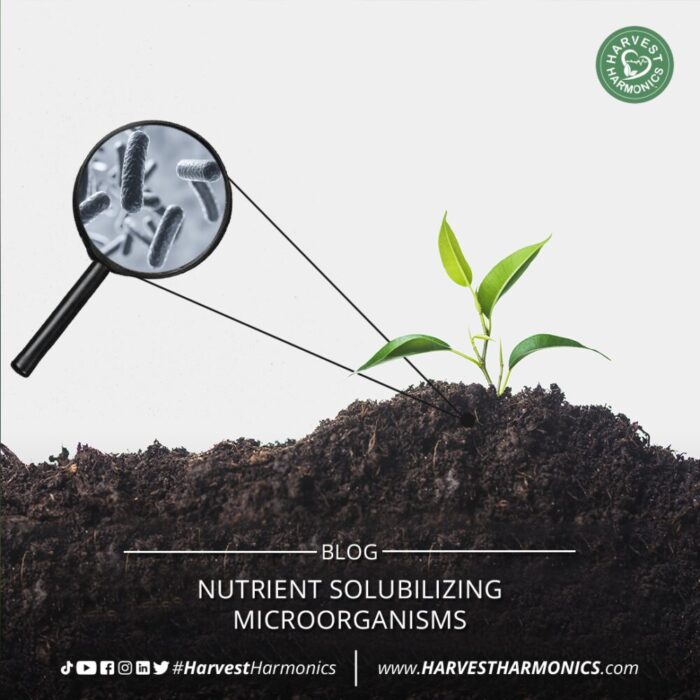
Nutrient Solubilizing Microorganisms
The microorganisms of the rhizosphere have maintained a close relationship with plants since the latter began to colonize the earth and have contributed to the maintenance, functioning and stability of ecosystems through their influence on the diversity of species in plant communities. This relationship has favored a mechanism of symbiotic association for the acquisition of nutrients and water by the plant and carbon by the microsymbiont.
However, agricultural activities have altered natural communities to achieve greater productivity per unit area and, as a consequence of this anthropocentric activity, the degradation of agricultural systems has accelerated, as in the case of the genetic diversity of Rhizobium, which by Due to some agricultural practices or chemical fertilization based on NPK, a decrease in genetic diversity has been observed in the nodule population of some Phaseolus vulgaris cultivars.
The need to reduce the use of chemical fertilizers and synthetic phytosanitary products has given way to the practice of inoculation and the use of so-called biofertilizers, which are formulated from microorganisms that inhabit the soil and are involved in the plant nutrition and growth. At present, the study and application of biofertilizers from phosphate-solubilizing microorganisms, as well as plant growth-promoting bacteria and nitrogen-fixing bacteria, have been widely extended.
Some phosphate solubilizing microorganisms can show other plant growth promoting activities such as production of indole acetic acid (IAA), gibberellic acid, cytokinins, ethylene, hydrocyanic acid (HCN), asymbiotic nitrogen fixation and resistance to soil pathogens; these characteristics are necessary for a microorganism to be considered a potential and efficient bioinput.
Nitrogen-fixing microorganisms, phosphorus and potassium solubilizers are widely distributed in a great diversity of soils and agricultural crops, only some show greater activity than others and only some species can be used in the formulation of biofertilizers with agricultural application. The inoculation of consortia of microorganisms can increase the microbiological diversity of the soil, especially in impoverished or depleted soils, allowing the use of their mineral stock and improving the conditions for crop development. If you would like to know more about our technology, contact us on our website www.harvestharmonics.com
Source:
Velazquez G. A, Ramos A. M. P. (2015). Benefits of P and K solubilizing microorganisms in the recovery and maintenance of agricultural soils. avocadosource.com
Beltran P.M.E. (2014). Phosphate solubilization as a microbial strategy to promote plant growth. Corpoica Agricultural Science and Technology. scielo.org
Press Room
Agricultural Technology for Farmers in India
Harvest HarmonicsTM New Biophysics Agricultural Technology For Farmers In India The Agricultural Biophysics technology, 20…
1
Organic Earth Tech, OETI, Launches One Million Dollar Technology
After hurricanes Maria and Irma, Puertorrican farmers are yet to receive the needed aid to recover. Organic Earth Tech…
0
Produce More From Less
CEO Harvest Harmonics Frank Arlia speaking at Replenish. Earth interview by Tia Kansara – London Climate Action Week. How…
0
Replenish Earth and the Environmental RE Talk Series
Replenish Earth and the environmental RE Talk Series event that reunited the top thinkers in the world Harvest Harmonics…
1

What is Spray Drift?
What is Drift?
Spray drift is a term used throughout the industry to describe the physical movement of pesticide droplets or particles through the air away from the planned target area. The droplets most likely to drift are those less than 150 microns in diameter.
The most determining factor is the wind speed
The greater the distance between the spray tip of the nozzle and the target area, the greater the impact of wind speed on droplet movement.
An increase in operating speeds can cause the wind to return in the form of vortex-type overhead currents behind the sprayer, trapping small droplets and thus contributing to drift.
When temperatures are above 25ºC and relative humidity is low, small droplets are more likely to drift, due to the effects of evaporation.
Low dosages generally require the use of small nozzles, which increases the risk of loss.
The smaller the nozzle size and the higher the spray pressure, the smaller the droplet size and the greater the proportion of droplets likely to drift.
Useful tips to control drift
Reduce the working pressure to increase the size of the drops. Due to the decrease in flow rate, it may be necessary to use larger nozzles to stay within the dosage indicated on the product label.
Use nozzles that produce larger droplets, such as low drift nozzles or higher capacity nozzles.
Decrease boom height to reduce losses, while maintaining adequate overlap to ensure desired spray coverage.
Causes of spray drift
A number of variables contribute to spray droplet losses; these are mainly due to the spray equipment system and weather factors.
Drop size
Within the spray equipment system, droplet size is the most influential factor. When a liquid solution is sprayed under pressure, it atomizes into droplets of various sizes: The smaller the nozzle size and the higher the spray pressure, the smaller the droplets and thus the greater the proportion of droplets with a tendency to drift.
Spray height
As the distance between the nozzle and the target increases, the greater the impact that wind speed can have. The influence of the wind can increase the proportion of smaller droplets deflected from the target and considered as lost.
Working speed
Increased operating speeds can cause spray to drift into updrafts and vortices behind the sprayer, which traps fine droplets and can contribute to drift. Ideally, apply chemicals according to good professional practice at maximum working speeds of 6 to 8 km/h (with air induction nozzles – up to 10 km/h). As wind speeds increase, reduce working speed.
Wind speed
Among the meteorological factors that affect drift, the one with the greatest impact is wind speed. Increasing wind speed increases drift. Therefore, it is important to carry out spraying operations during relatively calm hours of the day. Generally, early morning and late afternoon are the quietest hours.
Some recommendations when spraying
In low wind speed situations, spraying can be done at recommended nozzle pressures.
As wind speeds increase to 3 m/s, spray pressure will need to be reduced and nozzle size increased to obtain larger droplets that are less prone to drift. Wind measurements should be taken during the spraying operation using an anemometer or wind gauge. As the risk of drift increases, it is very important to choose spray tips with coarser droplets that are less prone to drift.
When wind speeds exceed 5 m/s, spraying should be stopped.
Environmental temperature and humidity
At ambient temperatures above 25°C with low relative humidity, small droplets are especially prone to drift due to the effects of evaporation.
If you would like to know more about our technology, contact us on our website www.harvestharmonics.com
Source: https://www.unicoop.com.py/
Press Room
Agricultural Technology for Farmers in India
Harvest HarmonicsTM New Biophysics Agricultural Technology For Farmers In India The Agricultural Biophysics technology, 20…
1
Organic Earth Tech, OETI, Launches One Million Dollar Technology
After hurricanes Maria and Irma, Puertorrican farmers are yet to receive the needed aid to recover. Organic Earth Tech…
0
Produce More From Less
CEO Harvest Harmonics Frank Arlia speaking at Replenish. Earth interview by Tia Kansara – London Climate Action Week. How…
0
Replenish Earth and the Environmental RE Talk Series
Replenish Earth and the environmental RE Talk Series event that reunited the top thinkers in the world Harvest Harmonics…
1
Artificial Intelligence in Agriculture
The technological revolution of recent years has also reached the agricultural sector to stay. More and more new ways of capturing information are being developed that, agronomically, can be of great interest to know the state of our farms and our crops. Artificial intelligence in agriculture allows knowing more data and adjusting all the tools more.
The sum of these two things means that we can adjust much more the amounts of phytosanitary products, fertilizers, the optimal point of harvest, pest control or water requirements.
In this article, we are going to learn a little more about artificial intelligence in agriculture, its main advantages and disadvantages, and some of the agricultural technological innovations that are coming onto the market.
What is artificial intelligence in agriculture?
Artificial intelligence (AI) applied in agriculture are all those capacities that a machine, sensor, monitor or computer is capable of performing with great precision, collecting a series of data that allow us to adjust and optimize any type of task and crop to the maximum.
There are many ways in agriculture where artificial intelligence is applied to obtain data and be able to analyze the different situations that arise with greater decision-making power. Let’s look at some examples:
Agricultural applications
Artificial intelligence has led to the development of several applications (apps) on agriculture. There are many examples related to apps on topics of agronomic interest.
Some allow us to manage farms from start to finish. Others are cartographic-type tools that allow us to measure the surfaces of the parcels and obtain geographic information about the area. There are also apps related to meteorology and also applications that allow you to manage an entire irrigation system using a mobile phone. All these applications simplify many tasks and time for farmers.
Sensors applied in agriculture
One of the tools that have been developed the most in recent years at the level of agro artificial intelligence are sensors. Sensors are used in all kinds of tools, cars, machines, etc. If we look at the use of sensors in agriculture, we can see advances in this aspect to improve the driving of tractors, tools and tanks to make applications. They are also used at a climatological level, with weather stations located at key points on farms and soil sensors that indicate both humidity and other key factors in soil fertility.
Aerial and satellite images
Apart from time management, organization and some technical parameters, artificial intelligence in agriculture applied in the field of aerial and satellite photos allows knowing the state of a crop, the amount of weeds or creating layers with the areas drier and more humid to adjust to the maximum the dose of irrigation necessary for the crop and within the same plot.
This artificial intelligence is used by taking aerial images using drones, such as the use of satellite photos.
Advantages and disadvantages of artificial intelligence applied to the agricultural industry
We have seen what artificial intelligence is and we have cited some practical examples of the number of things that can be done by applying AI in agriculture. Let us now see its main advantages and disadvantages:
Advantages
· Data: obtaining data allows greater decision-making power in a specific situation. Agriculture depends on many different factors, the more information we have, the greater control and power of decision and forecast we will have.
· Environmental and economic sustainability: the use of agro artificial intelligence allows us to adjust the doses of sowing, irrigation and phytosanitary products and fertilizers, which allows us to save a lot on phytosanitary products. This has a positive economic impact on our farm and the environment.
· Food safety: the control of all the processes, both in the field and post-harvest, allows exhaustive control of the traceability of the crops and their food safety.
Disadvantages
· Economic cost: although this is not always the case, applying artificial intelligence can sometimes be more expensive than the economic benefit it can bring you. Technology has advanced a great deal in recent years, but there is still technology that cannot be applied since its cost is greater than the benefit that ends up affecting the accounts of agricultural companies.
· Technology maintenance: maintenance is required on a regular basis in any type of sector. In the case of agriculture, technology is often exposed to different weather or adverse situations and inclement weather, so it requires greater attention and maintenance.
· Training: the use of artificial intelligence requires basic knowledge of technology.
If you would like to know more about our technology, contact us on our website www.harvestharmonics.com
Source: Agroptima
Press Room
Agricultural Technology for Farmers in India
Harvest HarmonicsTM New Biophysics Agricultural Technology For Farmers In India The Agricultural Biophysics technology, 20…
1
Organic Earth Tech, OETI, Launches One Million Dollar Technology
After hurricanes Maria and Irma, Puertorrican farmers are yet to receive the needed aid to recover. Organic Earth Tech…
0
Produce More From Less
CEO Harvest Harmonics Frank Arlia speaking at Replenish. Earth interview by Tia Kansara – London Climate Action Week. How…
0
Replenish Earth and the Environmental RE Talk Series
Replenish Earth and the environmental RE Talk Series event that reunited the top thinkers in the world Harvest Harmonics…
1
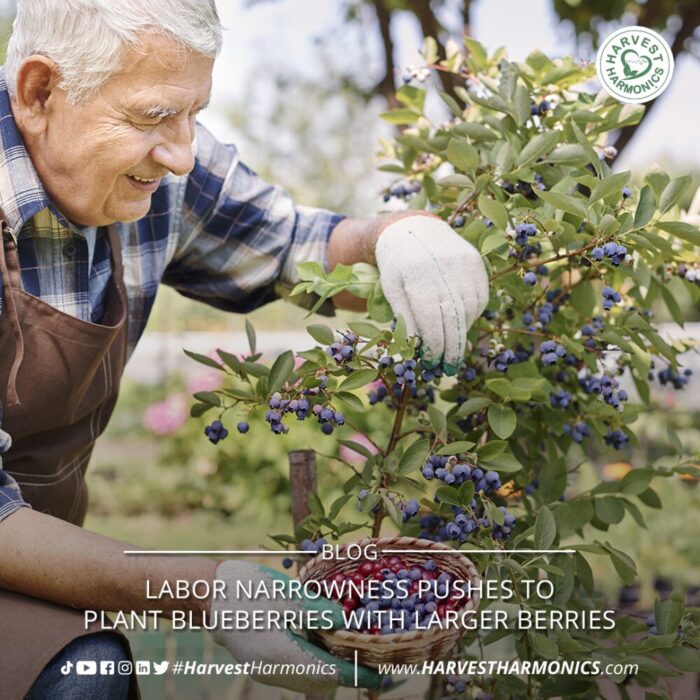
Labor Narrowness Pushes to Plant Blueberries with Larger Berries
The shortage of labor in the peak weeks of production is added as a factor to consumer requirements and has led companies such as Agrícola Cerro Prieto and Agrovision to incorporate the POP and Beauty varieties into their offer.
The Peruvian blueberry business continues to search for the best formula when choosing which varieties to include in its portfolio. And it is that, at the end of 2021, 60 varieties were counted, while in 2016 only 13 were registered, according to information from the Association of Blueberry Producers of Peru (Proarándanos). There are three criteria that guide the choice of producers, and that are becoming more and more relevant: the size of the berry, that the fruit has a less acid taste and that the berry has a good ‘crunch’, that is, firmness. This is related to the need to ensure the number of workers required in the campaign, especially at production peaks, and to meet consumer requirements regarding attributes such as flavor.
“It is becoming a challenge every time to get the volumes of people that are required, in some cases. People are paid per kilo harvested, if I have to harvest 1 kilo (kg) and my berries weigh 1 gram (g) it is 1,000 berries that I have to harvest, unlike if I have a fruit with double or triple of weight. It is more pleasant for the harvester and it yields more”, considers advisor Bruno Mancilla, from Consultora Santa María, a firm led by also advisor Sebastián Ochoa.
The agricultural export company Agrícola Cerro Prieto confirms that between weeks 37 and 40 there is a shortage of labor in Lambayeque. “In those weeks is where the majority of farms in this area are at peak production. People want to get to their goal quickly and have an extra. They no longer want to go to farms with a lot of Biloxi,” says their agricultural manager, Alfredo Chan Way. For example, if a worker can take out about 25,000 kilos/person in eight hours, with a larger-sized fruit he can take out around 80,000 kilos/person.
Agrícola Cerro Prieto has some 1,120 hectares of blueberries in Chiclayo. In addition, this year they will have significant production volumes of POP and Beauty. Currently, the main varieties of the firm are Biloxi, Ventura and Rocio.
In this context, the POP and Beauty varieties were born, both of which are part of Fall Creek’s Sekoya program. At least three companies have incorporated these varieties into their portfolio: Agrícola Cerro Prieto, Agrovision and Agroberries. «Today I have planted two important varieties: POP and Beauty. In other words, by 2022 I will have five varieties in major productions,” confirms Chan. The varieties stand out for their larger berries, their flavor and for having a good ‘crunch’. Firmness helps them to be travelers and arrive in optimal conditions to destinations such as China. Advisor Mancilla says that the ideal is to have blueberries about 16 to 18 millimeters. “You are looking for a large fruit, but not excessively large. A larger volume fruit always tends to soften faster”, he complements.
According to the advisor, it is not only important to obtain large berries, but also to have consistency. “The other important thing is that their caliber is sustained throughout the campaign, that they don’t fall. It happens to us many times, Ventura is starting with an average of 3g and at the end of the campaign he drops to 2.5g. Years ago Biloxi ended up with an average of 2 grams or 1.8 grams. This has led to the desire to search for better varieties,” explains Mancilla.
Both varieties stand out for their more pleasant flavor. According to the consultant Mancilla, the Peruvian industry is looking for a better flavor, since the berry tends to be acidic. “Perhaps many times in Peru one does not realize it, but the fruit from Mexico, the north of the US and Chile is sweeter. In the Peruvian case, there is no temperature differential day and night, which is decisive at the time of fruit ripening. On the coast of Peru, we have a temperature differential of 5° C, the fruit goes from being very acidic to being a flat fruit, which loses its flavor. Trying to raise brix degrees, the fruit is left on the plant for a longer time. That causes him to be physiologically overripe. For this reason, the blueberry harvest index is the color, not the brix,” explains Mancilla.
An Incipient Path
Currently, in Peru the predominant varieties are Biloxi and Ventura. In 2021, 3,291 ha of Biloxi, 2,748 ha of Ventura and 643 ha of Rocio were registered in La Libertad, the main blueberry producing area. But, the hectare of POP and Beauty was maintained, reaching 43.2 ha and 11.34 ha, respectively, last year. In the case of Lambayeque, last year some 1,447 ha of Ventura, 397 ha of Rocio, 350 ha of POP, 324 ha of Beauty and 231 ha of Biloxi were counted in order of importance, according to Proarándanos. The year-on-year increase in the area dedicated to these varieties
in the area is notable. Last year the producing areas of Ica and Ancash had, for the first time, the presence of both varieties.
Variation of the hectare of blueberries in Beauty
2020 2021
La Libertad 11,14 11,34
Lambayeque 34,29 324,29
Ica – 5,3
Ancash – 24,92
Source: Proarándanos
A unique flavor that is pleasant to the palate, together with the search for larger berries and traveling fruits, will continue to make a difference when choosing the best genetic material. The club of blueberry growers that has POP and Beauty is even smaller, but it is anticipated that more farmers will obtain the respective licenses over time. “I think these varieties will continue to grow. They are just entering Peru”, anticipates Mancilla. If you would like to know more about our technology, contact us on our website www.harvestharmonics.com
Source: Red Agrícola – Miriam Romainville Izaguir
Press Room
Agricultural Technology for Farmers in India
Harvest HarmonicsTM New Biophysics Agricultural Technology For Farmers In India The Agricultural Biophysics technology, 20…
1
Organic Earth Tech, OETI, Launches One Million Dollar Technology
After hurricanes Maria and Irma, Puertorrican farmers are yet to receive the needed aid to recover. Organic Earth Tech…
0
Produce More From Less
CEO Harvest Harmonics Frank Arlia speaking at Replenish. Earth interview by Tia Kansara – London Climate Action Week. How…
0
Replenish Earth and the Environmental RE Talk Series
Replenish Earth and the environmental RE Talk Series event that reunited the top thinkers in the world Harvest Harmonics…
1